After a long moment with his breath held, the mountain started shaking…
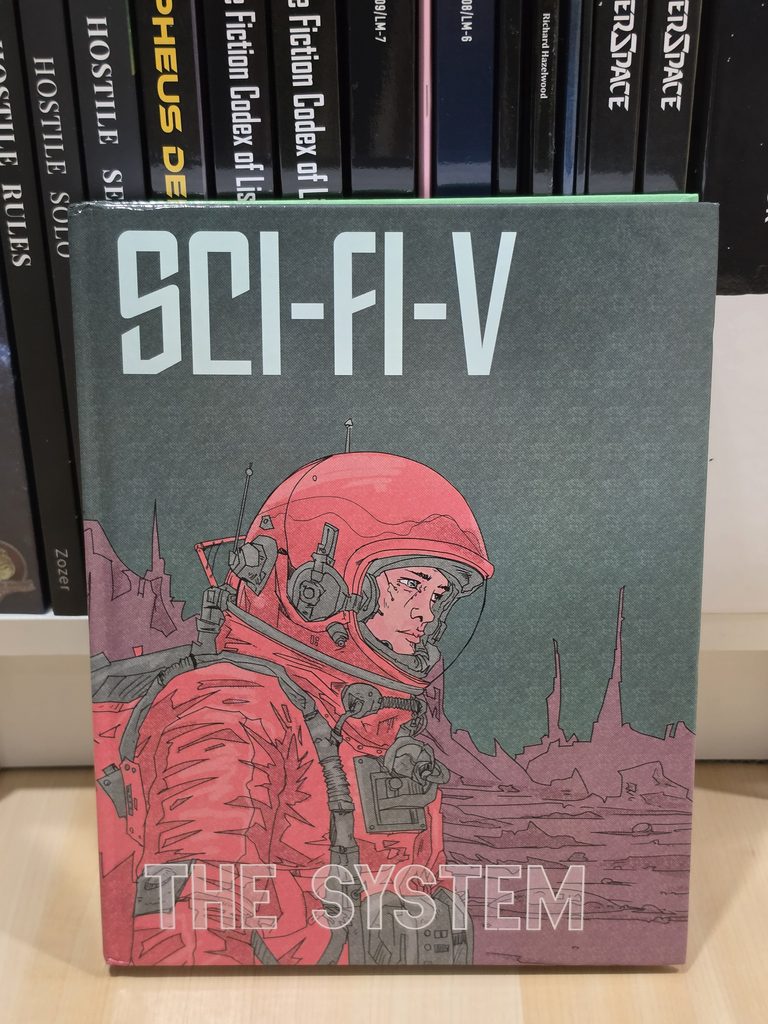
One evening last month, I sat on the floor of my office. I was in the mood to read an RPG rulebook, and had pulled out my copy of Sci-Fi-V. There was no particular reason behind the choice, other than it being a book that was within arms reach after sitting down. Only a few pages in my oldest son walked in.
"What are you doing?"
"Reading."
"What are you reading?"
"A science-fiction TTRPG rulebook... basically a book that can help me tell stories. Would you like to see?"
With that, I showed my oldest the table of contents, with some brief explanation about the types of things that would be in each section of the book. One in particular caught his eye – the Hexcrawl.
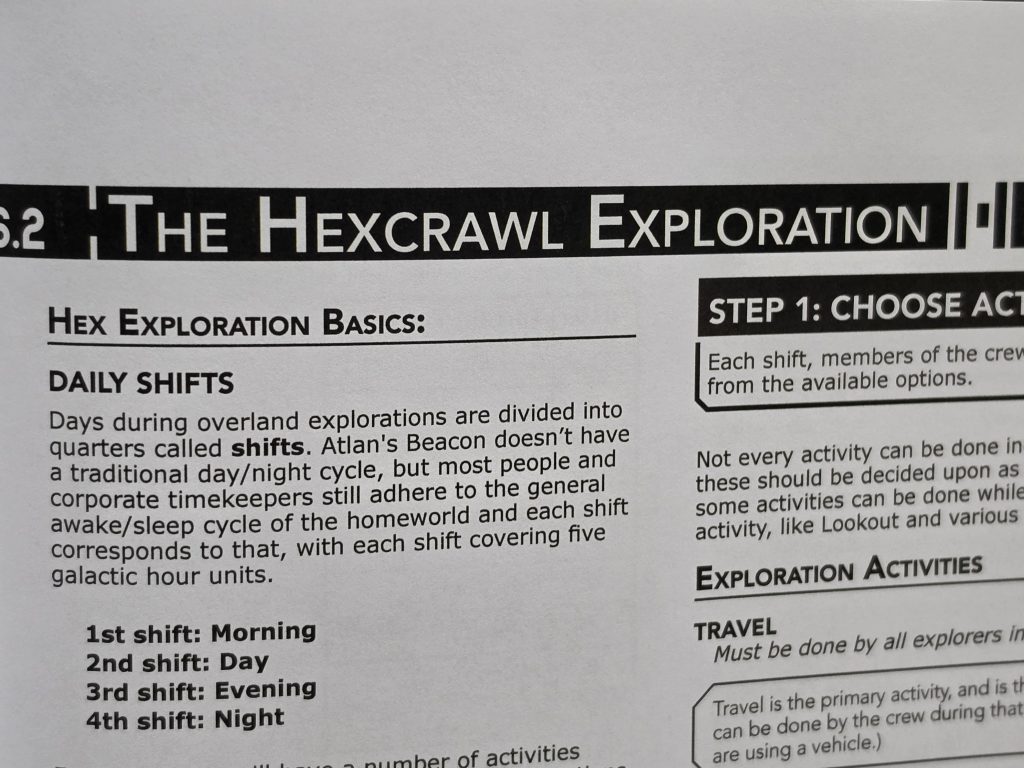
He knows what a hexmap is, he’s seen me draw them, and has drawn some of his own as well. I think that prior exposure piqued his interest. So after asking what a hexcrawl was, we perused the chapter and I explained how you would generate a new hex with terrain, landmarks or POI’s, weather and determine if anything happens when you explore it.
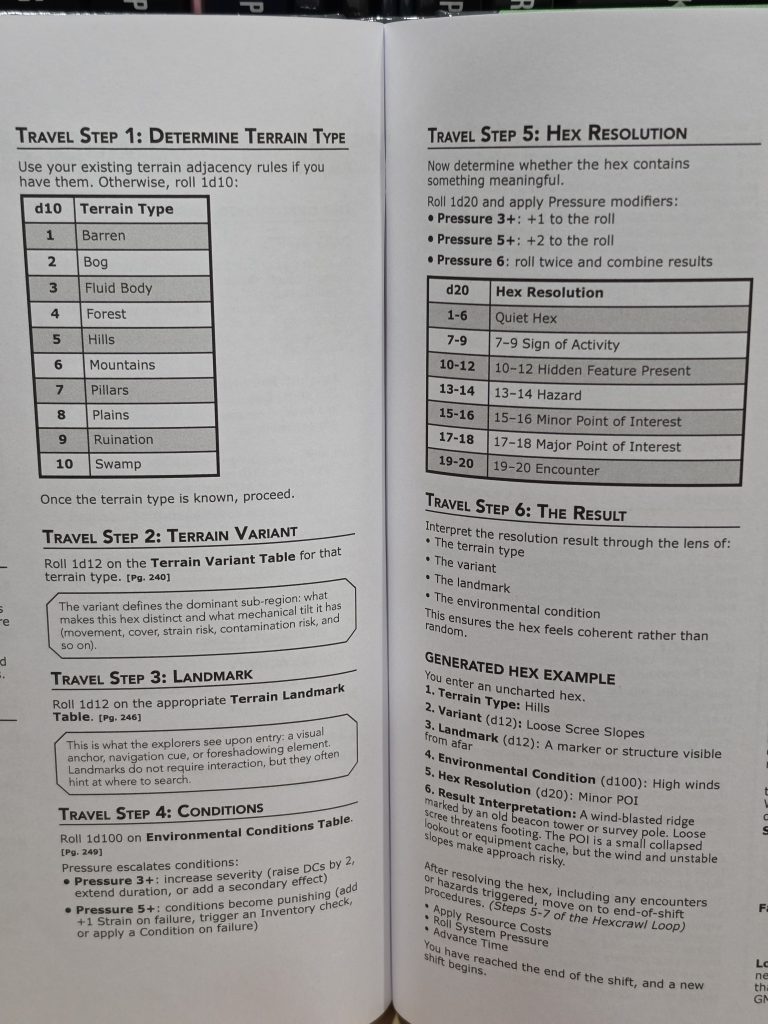
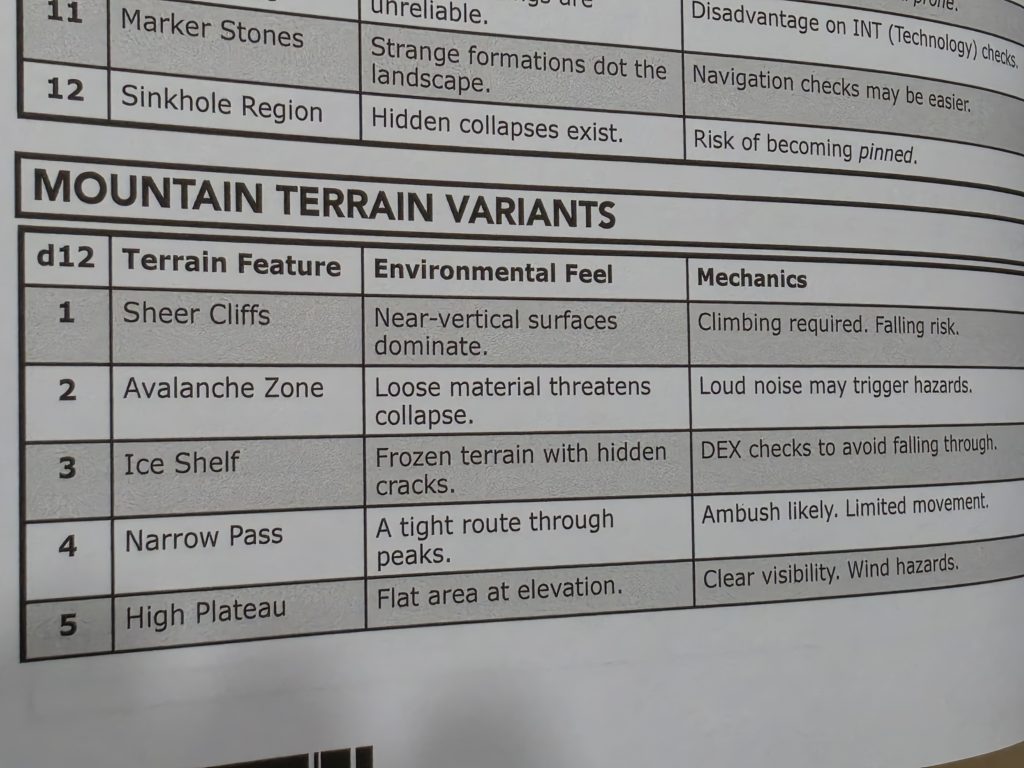
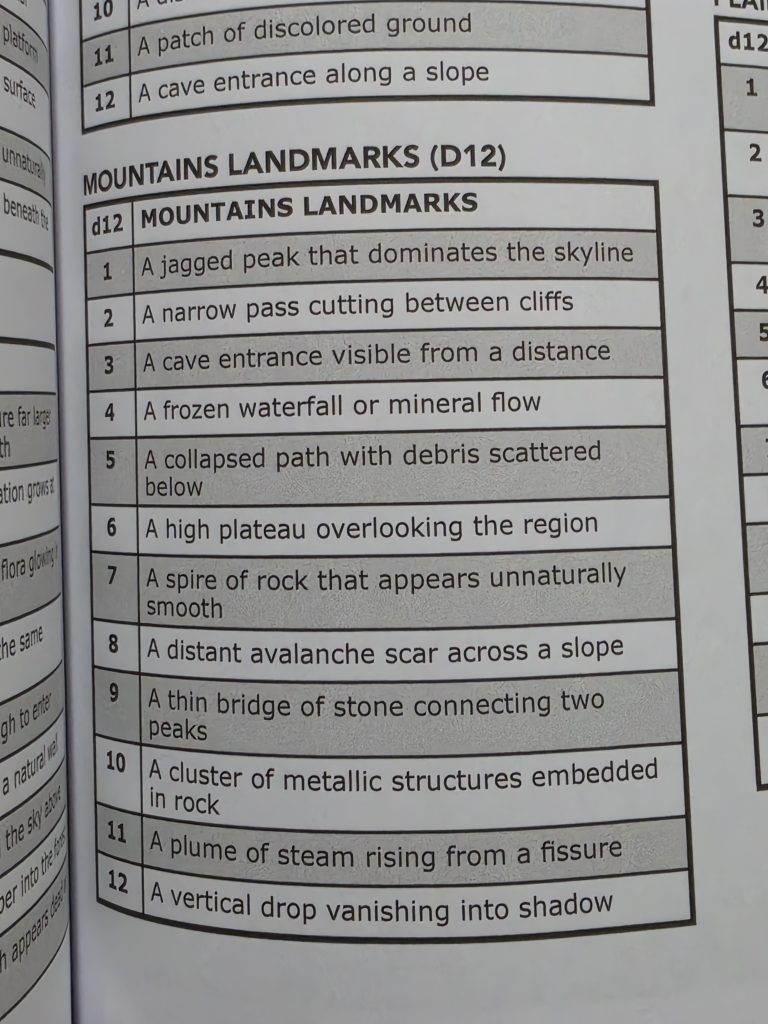
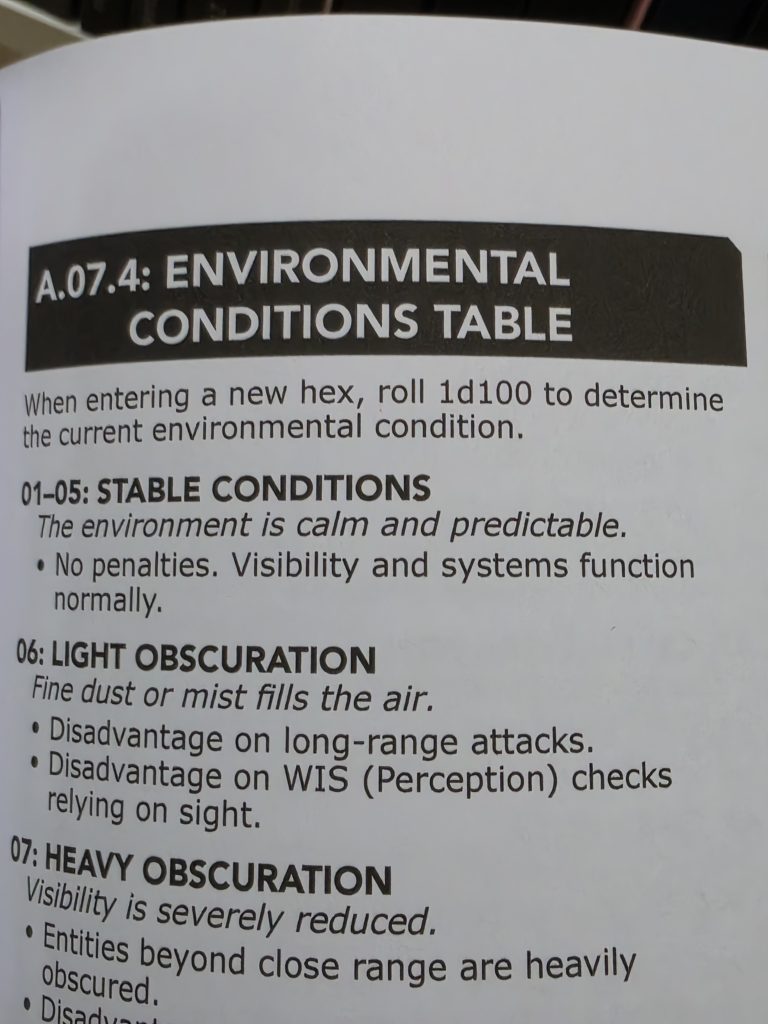
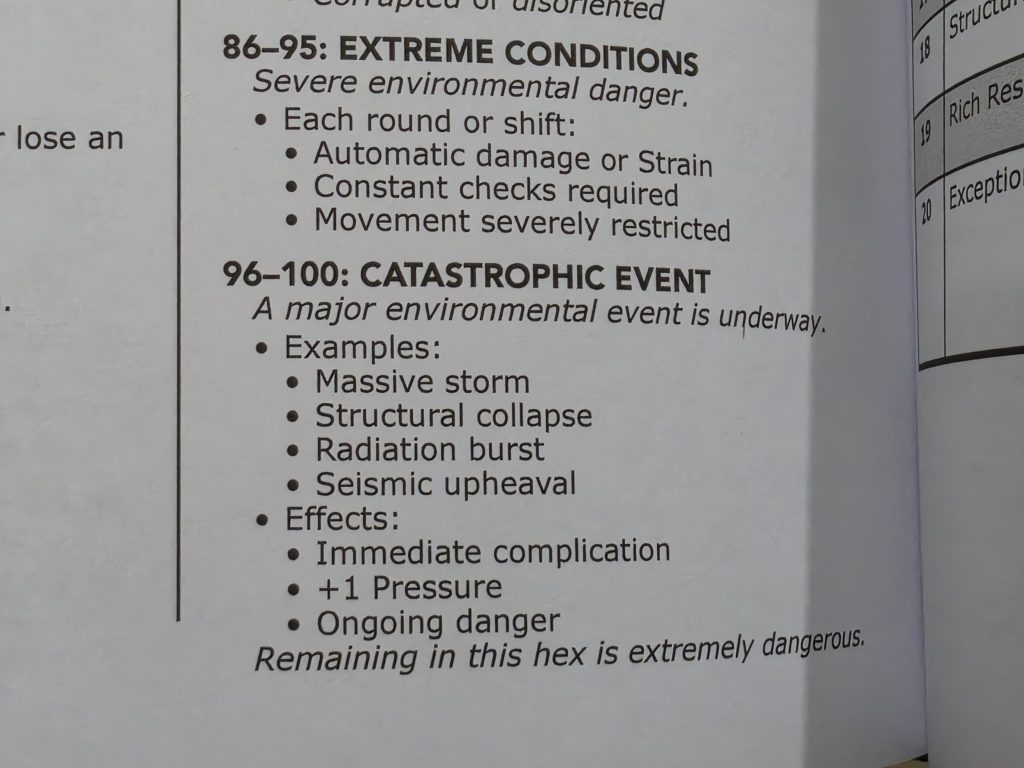
I like the hex generation rules in Sci-Fi-V, they’re straightforward and simple but give the option (via semi-random tables) to add more details. Generate a broad terrain type, then you have the option of generating a more detailed terrain variant, add a landmark, conditions (severe weather, catastrophes, etc), and what they call the “Hex Resolution” (another method to add unique features, events, encounters, etc).
So we pulled out some dice and generated a hex. At each step in the process, I would ask him for his thoughts or what he thinks it would be like in the place we were creating. Then I thought, why not tell a story about some sort of space explorer on a strange planet, who happens to be in this very hex we’re generating. So we did.
Above are some of the tables and results we rolled up, and below is a brief outline of the story my son and I created. With me asking questions, trying to lightly steer the story in a coherent direction.
Our character is on an alien world, traversing mountainous terrain. He's atop a high plateau, halfway up a nearly sheer mountain face. Sitting on this plateau is a large birds nest, nearly 12 feet in diameter. He was there to collect the egg of a monstrous bird.
Due to the strange, alien atmosphere, and height of the mountain, sounds travelled in unpredictable ways. As he pulls himself into the nest, a small misstep causes a twig to *SNAP*. What should have been relatively quiet ends up resounding through the nest and off the cliff face, with echo's loud enough he has to cover his ears. It died down and he stopped to listen. After a long moment with his breath held, the mountain started shaking...
A large rockslide tumbles down the mountain nearby, forcing him to abandon the nest and rush along the cliff face of the plateau. Running along, he spots a cave entrance and rushes in.
A short way inside the cave, he finds a mysterious robot - it looks deadly. What is it doing here? Is it active? Was it guarding something?
He doesn't have long to think on the matter, as suddenly the whole mountain starts to rumble. The rockslide triggered an earthquake...
It was an unexpected treat to both use my imagination and spark his. I hope we can embark on another Pen & Paper Quest!
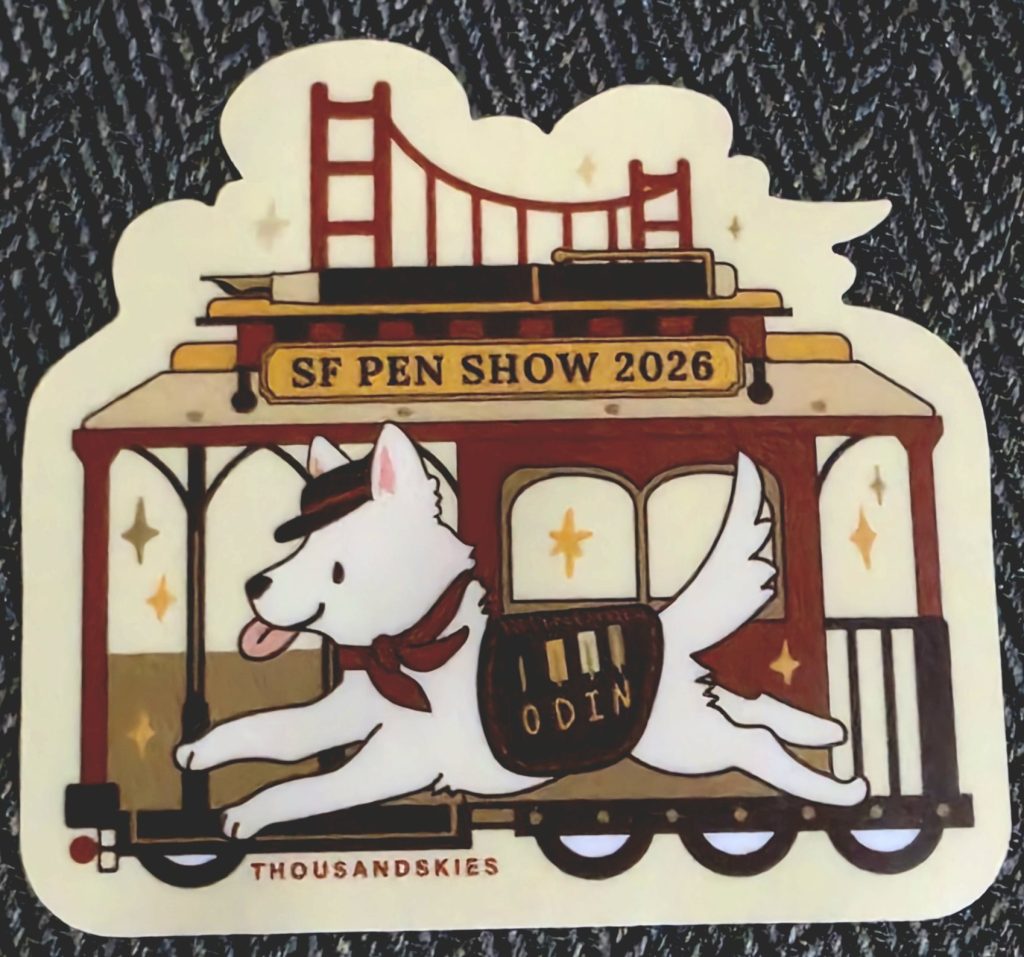
It’s that time of year again – the 2026 San Francisco Pen Show (SFPS)!
This is always a fun time of year for me, because I get to be around such kind and creative people. There is an infectious vibe that re-kindles a small creative spark and makes me want to do more writing. While packing, I also struggle thinking about what I should take in my RPG kit, because there’s always so many games I want to play and share with others. I was actually going to try and teach a class at this years SFPS as an intro to solo RPG’s, but when you hem and haw, doubt yourself and generally keep putting off the class signup sheets… maybe I’ll try again next year.
This year at SFPS I had two main focal points. Beyond that, everything else was a bonus.
Taking my son to his first pen show
Seeing a lot of the folks that I only see once a year
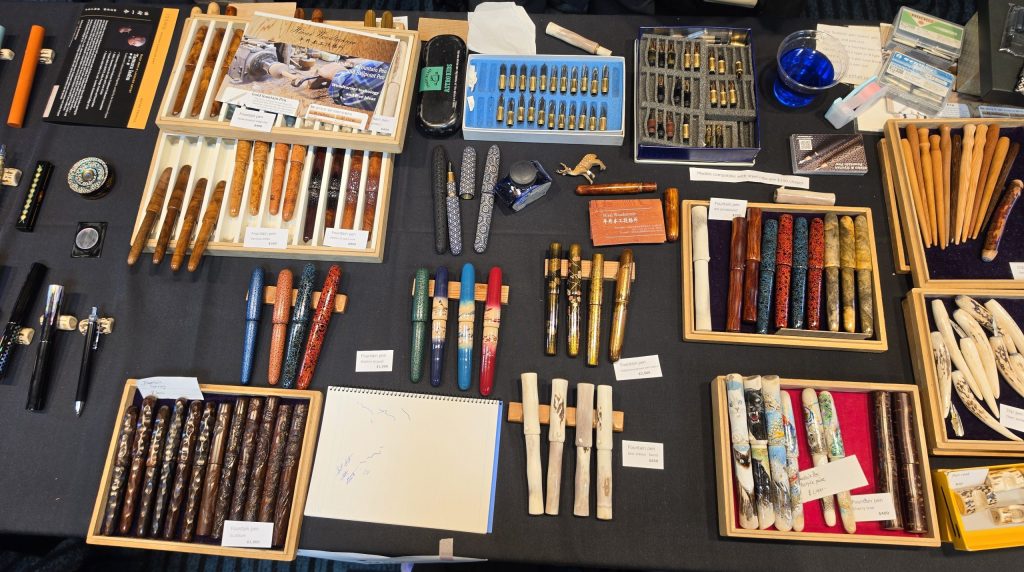
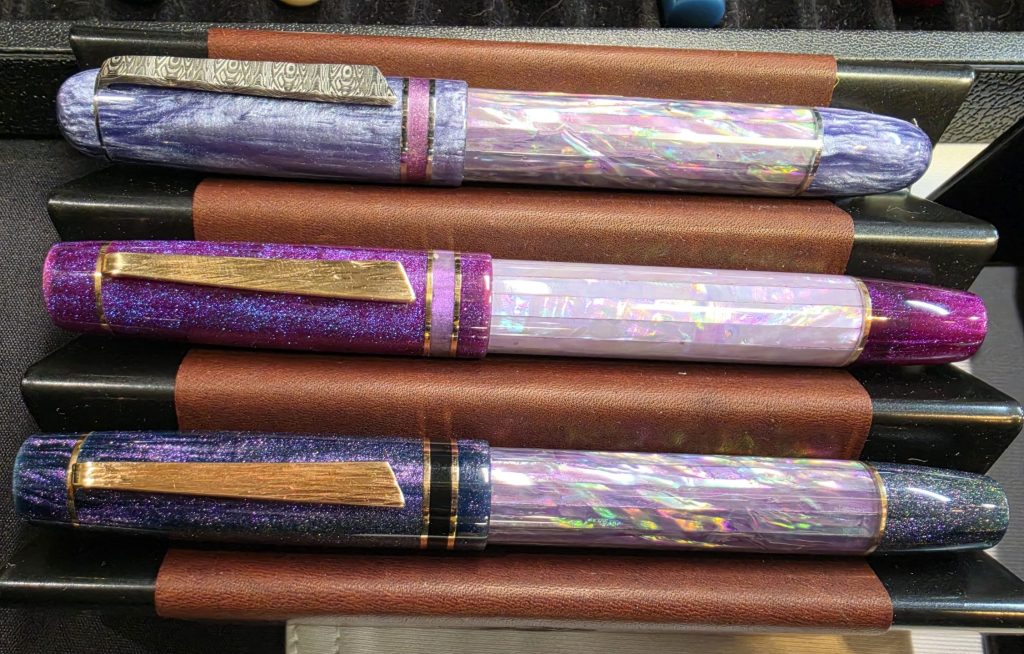
I attended the show Friday through Sunday, though only for a few hours on Sunday morning. In fact, it’s the first year I’ve ever attended the show on Sunday. I didn’t get many pictures of the show in general (something I’m still not very good at remembering to do) so lets just do a quick recap and I’ll post a few pictures between.
They did some new things this year, one of which was using a smaller ballroom outside the main show floor as a vendor space (rather than for classes). It was nice, creating a “Little Stationery Fest” feel, since the vendors there were primarily stationery focused. However, they also had several vendors that always draw a lot of foot traffic – Toyooka Craft, Glass Studio AUN, and Yamamoto Paper for example – bringing its own problems.
Friday was crazy busy. There was an overwhelming rush of dedicated stationery and pen people Friday morning. There were stories of the entry line forming at 5:30 AM (3.5hrs before opening!). I arrived an hour early and I believe those stories, because my spot in line was outside at a sidewalk corner, watching the line start to wrap around the hotel. There was such a rush that some vendors sold out of all (or mostly all) of their stock!
I spent most of my Friday checking the show floor and shopping, since there was no way I’d get a walk-in appointment with a nibmeister. There were several purchases of stickers, washi, and pen cases/sleeves, along with conversations with vendors I hadn’t seen since the last show. Despite the crowds, it was a great vibe! Everyone was super excited, and given the state of the world, folks were still out to enjoy the company of fellow ‘penthusiasts’ and participate in a little Capitalism. I had to leave in the early afternoon, but it was a great first day.
I was back early Saturday morning, this time with my son in tow. The lines were more tame, I was able to get a walk-in appointment with Kirk Speer of Pen Realm (finally getting some needlepoint grinds), and of course there were a few more purchases. Being my sons first show, he did great. The crowds didn’t bother him much, and he enjoyed seeing all the “stuff” that was on display. He had a lot of fun getting a pen sleeve from JillryByTheSea, some stickers from Pineberry, collecting some charms for the Shaker Keychain event, and completing the kids scavenger hunt.
The prizes for the scavenger hunt looked to be donations, including a bunch of entry-level fountain pens, some inks and other assorted bits-and-bobs. He ended up choosing a Ferris Wheel Press Carousel fountain pen. I keep encouraging him to write a journal and draw, now that he has a couple fountain pens, maybe he’ll want to keep doing it too. He’s even made some of his own “RPG Games”; though they are more along the lines of robust character sheets, with drawn characters and weapons, made up stats and other bits he thought looked nice.
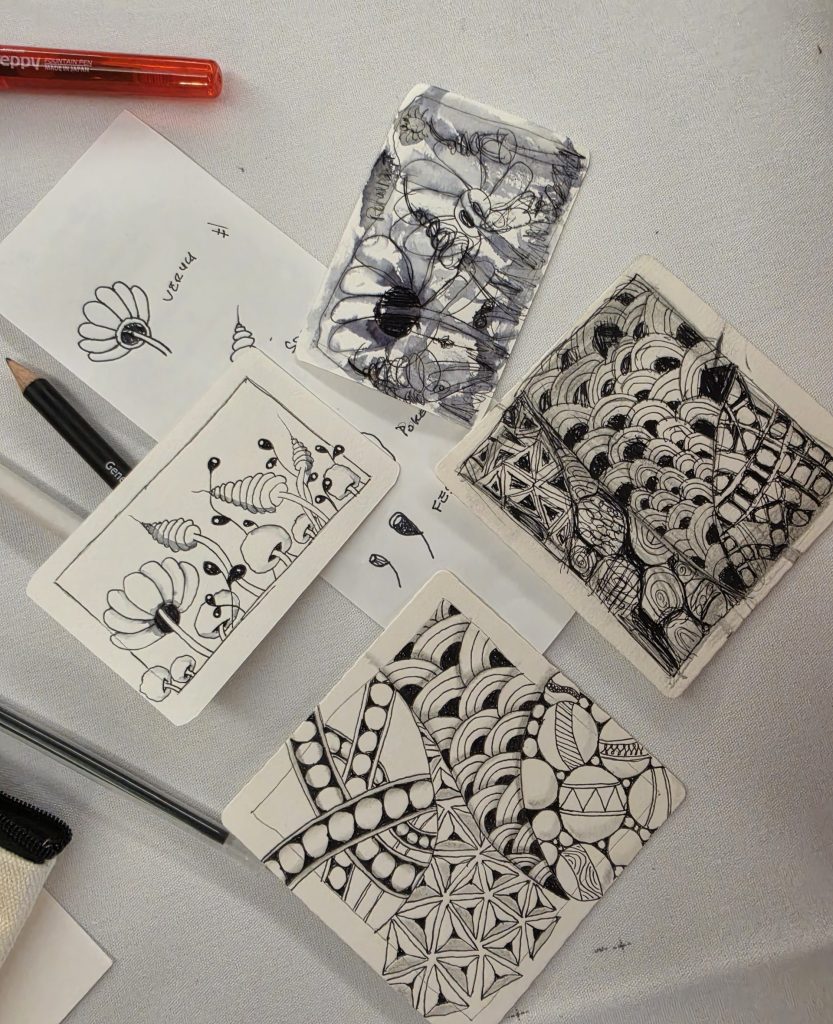
Zentangling is such a calm, creative outlet. My son went a little overboard on shading, but he still did great!
Saturday was also class day. In the morning we took a Zentanging class with Analisa Bevan. I took the same class last year, but was excited to do so again with my son. He’s very creative and I want to keep encouraging that. I was proud of what he was able to do for his first try, and he was so excited that when he went home later in the day he created another Zentangling card.
In the late afternoon I took Taizo Yamamoto’s paper seminar. It was an insightful look at modern paper making, the decline of writing paper and paper factories, and his own revival of a discontinued Japanese washi paper known as Ken Kaku Den. I really enjoyed the inside look at the work that goes into making the writing paper we use today, how volatile things are, and how all the paper choice we have may be gone before we know it.
This was also the first year I’ve been able to attend the Pen Show After Dark, which is probably one of the greatest parts of the show. It’s effectively a bunch of pen and stationery people hanging out, chatting, decompressing from the day, and having a good time. I tested some pens, played billiards, sang along with karaoke and even pulled out my solo RPG kit to work on copying down a few rules into a pocketmod.
Sunday was relaxed in comparison to Friday and Saturday. Given I had already done my shopping and nib grinds, I wasn’t in a rush to get in early, and I was mostly there to chat with some of the vendors and pen-friends before taking off. It was a great morning, and I got to catch up with folks as well as wander leisurely around the show. The crowds were less and even after general admission entered, you could tell it was a slower day.
So, what was in my show haul?!
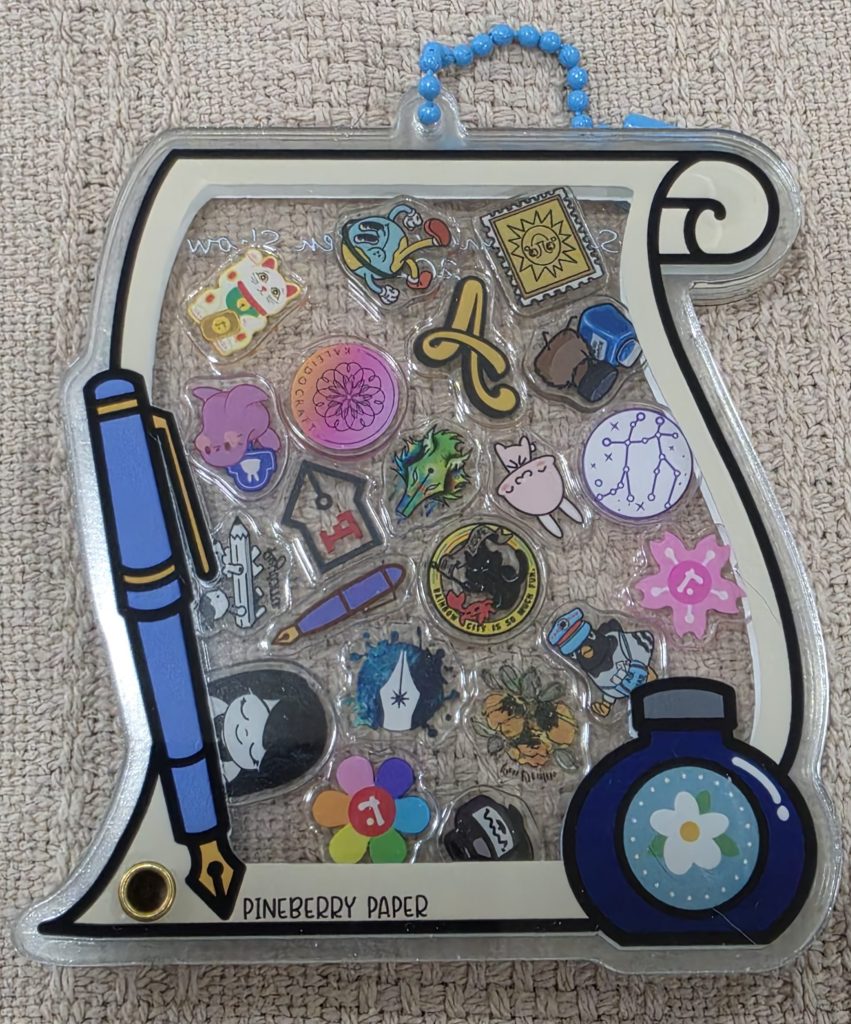
It was fun to collect Shaker Charm pieces, less fun to remove all the protective film from those tiny charms…
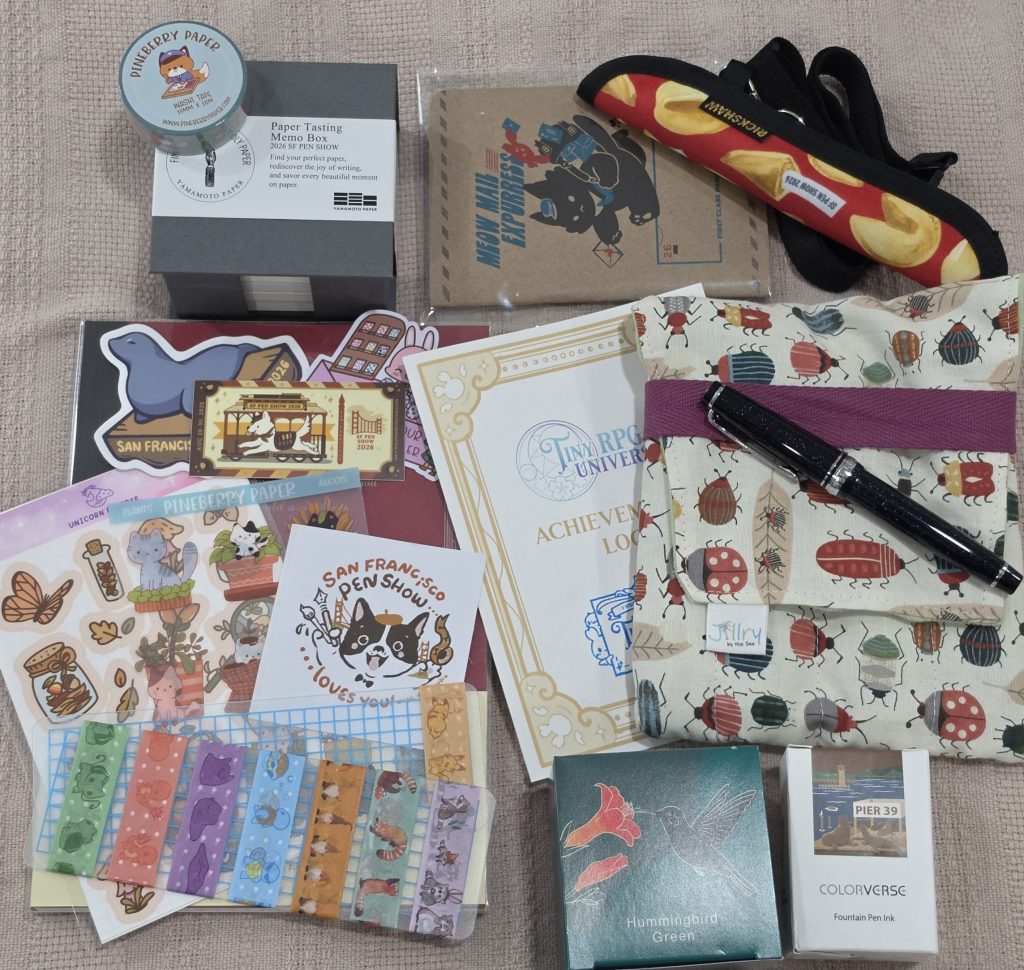
Well, the full list would be too big for me to include here, but here’s a look at some of the things I picked up, in no particular order (not all of the items listed below are in the above images).
A5 notebooks from Itoya, because it’s my favorite size and they were a great price
A5 notebooks from Musubi, because they’re great quality and have a variety of papers that are fun to use
Several Rickshaw items, including pen sleeves, the new Brasstown release, a postcard and stickers (and a couple of gifts for friends)
A pre-owned Sailor Pro Gear Starburst Galaxy that I had Kirk grind to a needlepoint; it wasn’t something I was looking for, but it looked nice and was more affordable than the Sailor King of Pens that was catching my eye right next to it…
A second needlepoint grind on a Kaweco Lilliput I brought with me; I’m hoping to use the needlepoint nibs with my current Solo RPG travel kit, which benefit from smaller writing to save space on the limited paper you can bring and smaller notebooks. I’ll do a future post on this!
A whole collection of Shaker Keychain charms from nearly every participating vendor (and then some – curse you Pineberry and your hidden charm menu!)
Several Yamamoto papers, that I hope to use in some book binding projects
A few new inks, including the SFPS Show Special ink, and Kobe Hummingbird Green from the Vaness shop
Quite a few postcards from various vendors, which have some fantastic art (mostly cat themed!); this is another thing I’d love to get back into, mailing postcards to family and friends
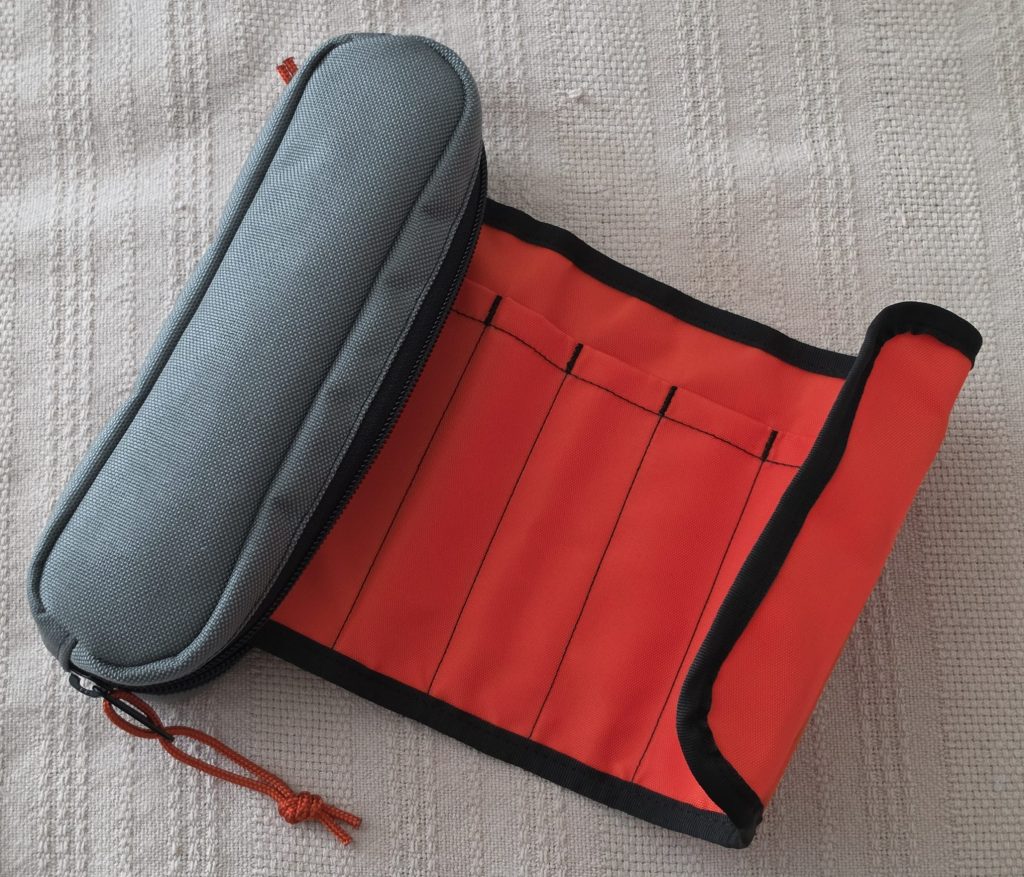
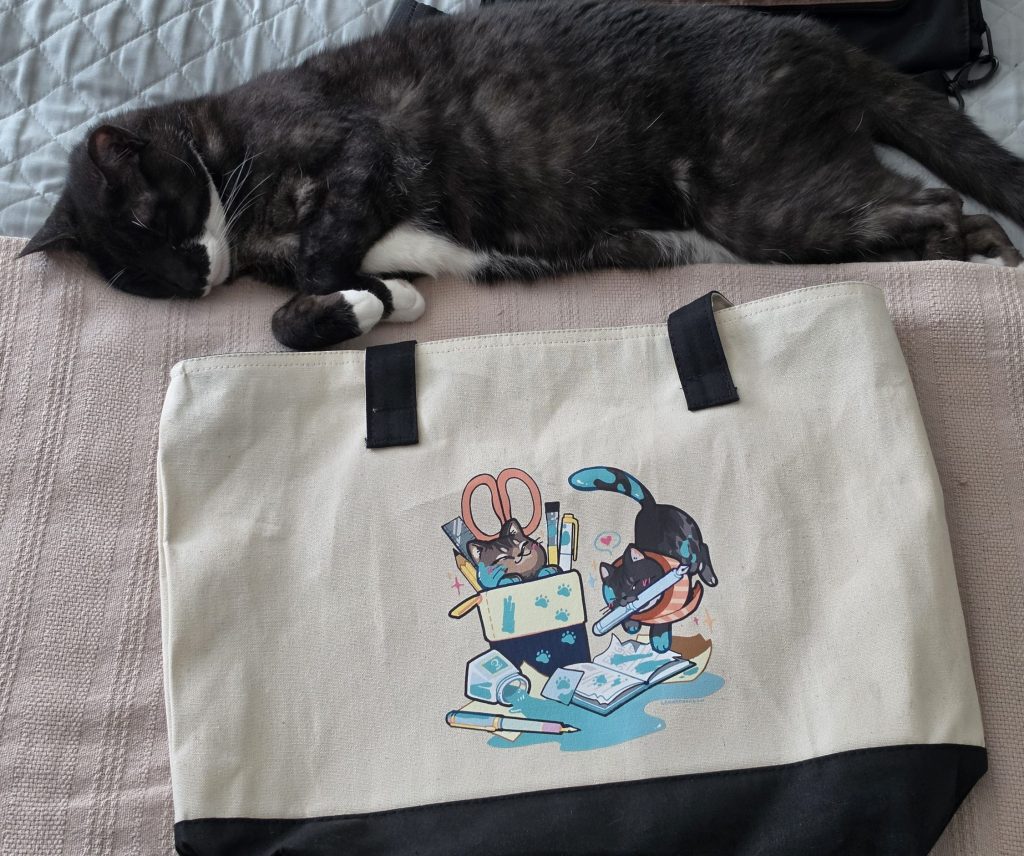
The Enigma + SakuraDragon collab bag (image below), which came in handy given how many things I picked up throughout Friday and Saturday.
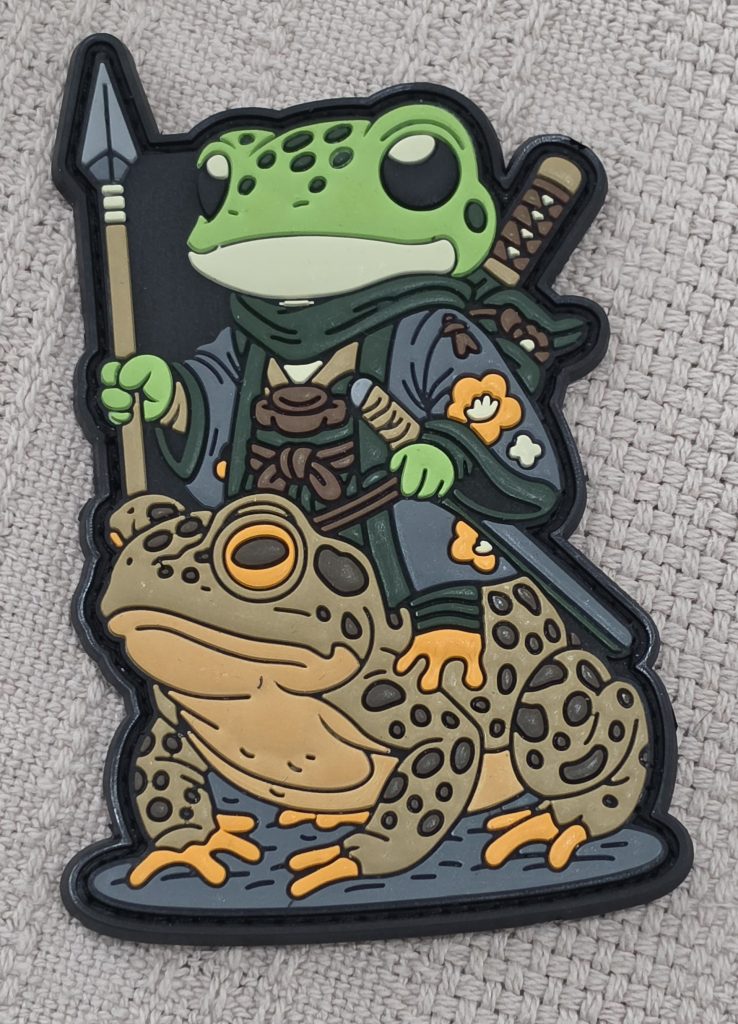
An awesome frog warrior patch from DRDGear, that I feel like could be an NPC in any anthropomorphic critter game or setting
My cat decided to “help” when I was unpacking my show goodies at home. Though I’m pretty sure it was mostly her way of saying, “How dare you leave me for that long.”
Overall, a fantastic show, and I’m looking forward to next year already. Even if I don’t teach a class, I’m hoping through the rest of the year I’ll make the time to put some work into a project that’s been in my mind for several years, but we’ll see how that pans out.
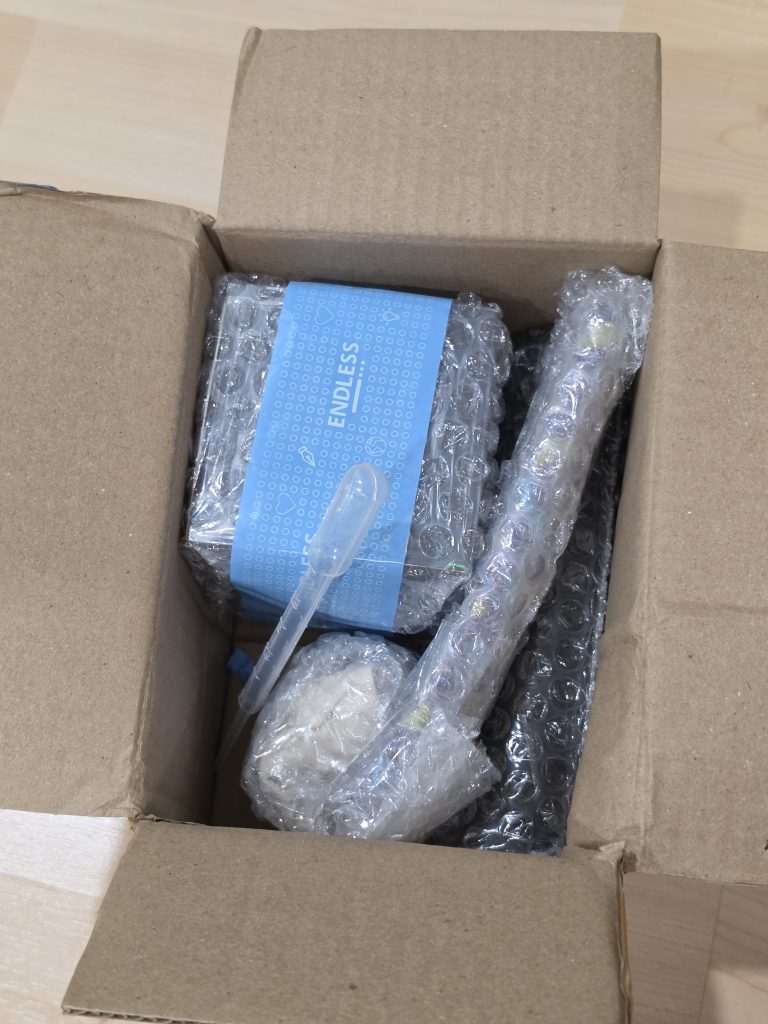
I also found this small box waiting for me when I got home… Perhaps more on that in a future post! Until then, I hope you have some fantastic analog writing instruments and stationery products that bring you joy whenever you embark on a Pen & Paper Quest!
This past weekend was one of the few events that I look forward to all year. On Saturday, June 27th, Free RPG Day took place at Local Gaming Stores (LGS’s) across the world (except for some locales who had delays in shipments, sorry ya’ll!).
Free RPG Day (FRPGD) is a great reason to visit local game shops and support small businesses (as most LGS’s are). Game publishers of all sizes partner with the organization behind FRPGD to send ruleset quick starts, adventures, game samples, and all sorts of goodies to stores. The goal? Get more people into their LGS, foster a community of like-minded individuals who love tabletop gaming, and get some more games out there for people to try!
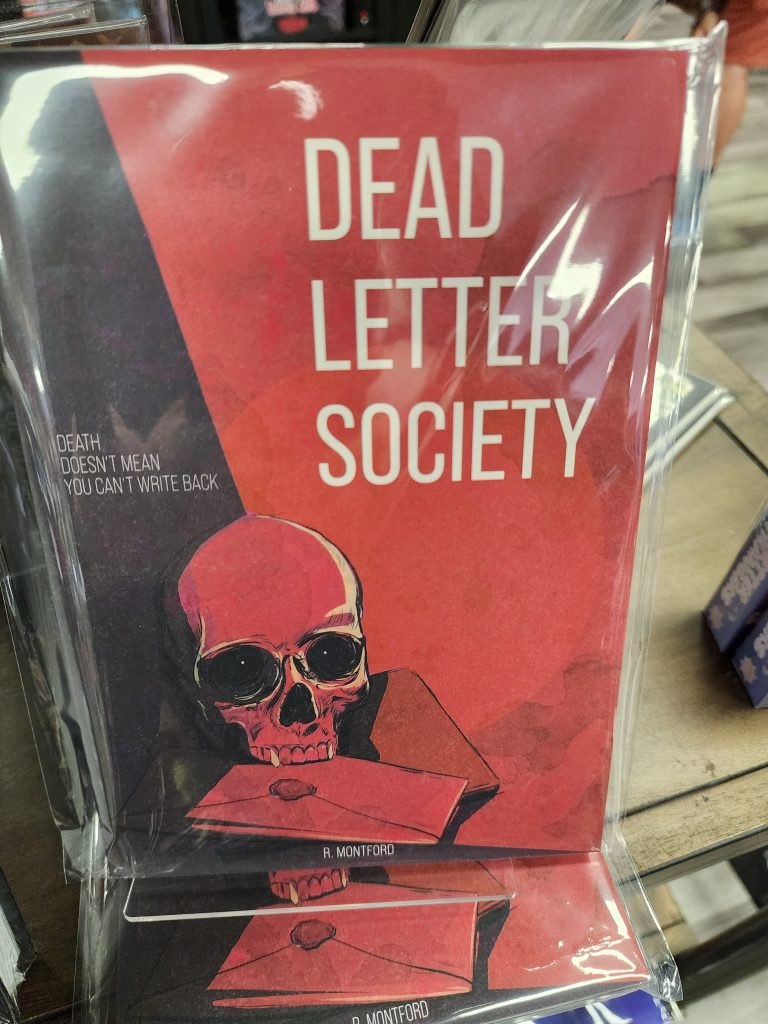
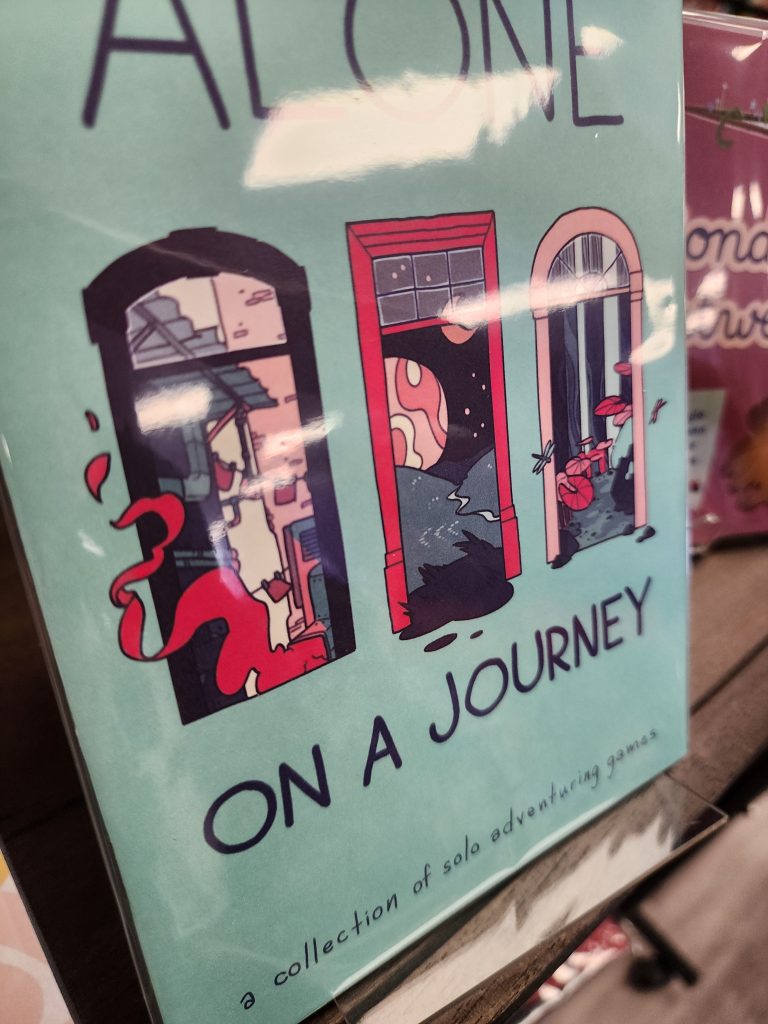
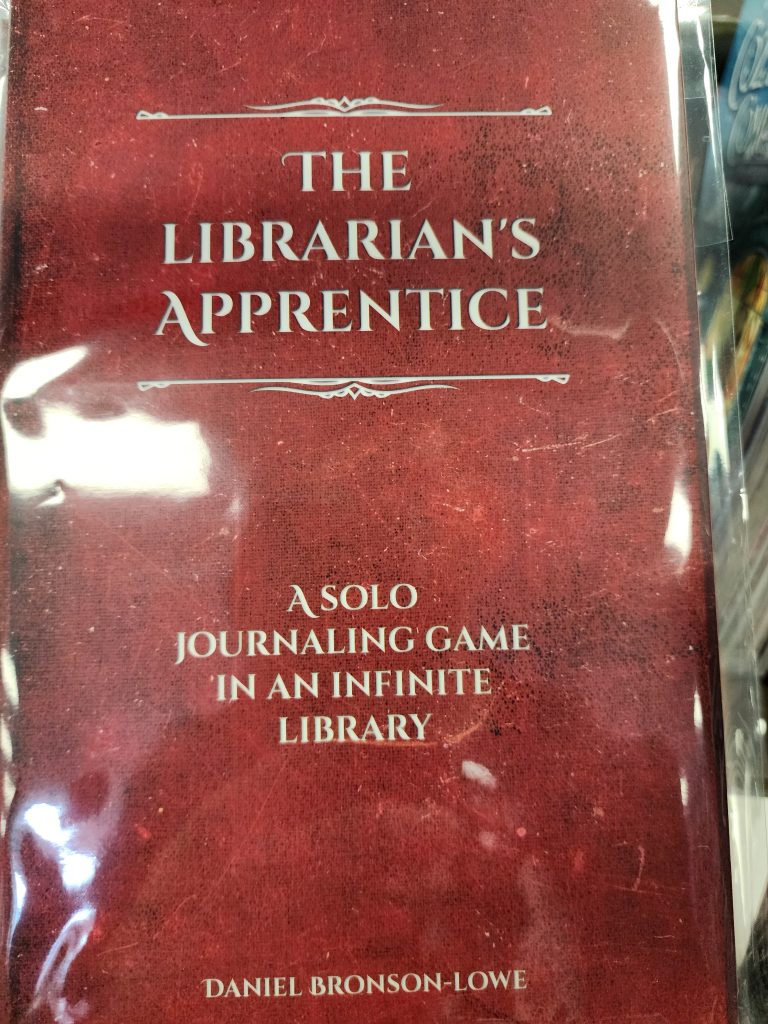
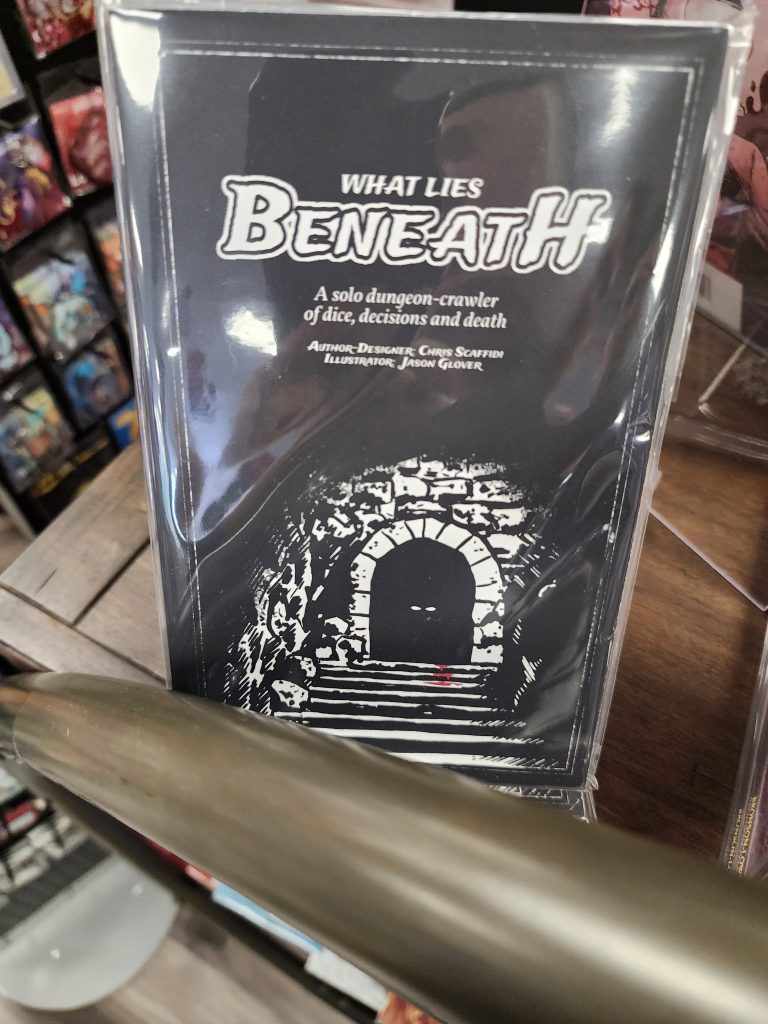
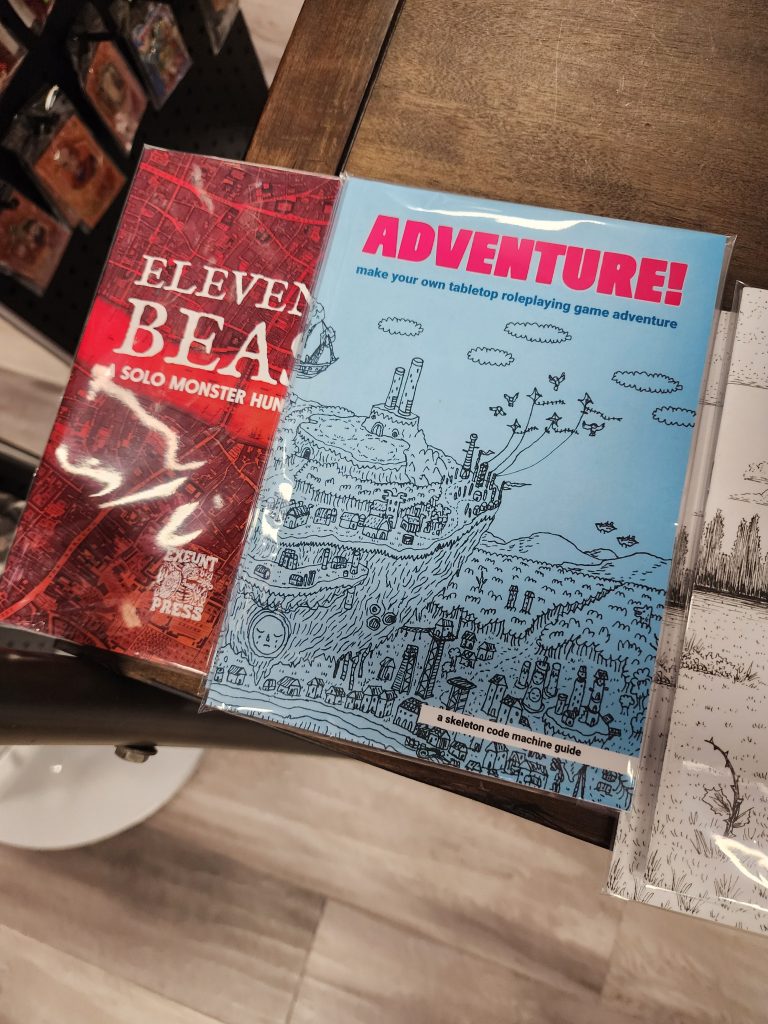
This was exactly the kick I needed to visit an LGS that I haven’t been to in quite some time, since it’s now a 40+ minute drive away. I’m glad I made it out, because I had a great time browsing the large offering of board games, TTRPG’s, dice, comics, miniatures and more. I got to read through some of the, new-to-me, Dungeons & Kittens RPG core rulebook, check out physical copies of Dead Letter Society, Librarians Apprentice, Eleventh Beast, and more. Honestly, they had a much larger selection of solo-focused RPG’s than I would have thought!
As is tradition for any in person event, I arrived a little early, and joined the group waiting out front in anticipation. It was nice just listening to some of the conversation going on, with different GM’s discussing their groups antics and various adventures they’ve run through for their parties. Just being around people who share the same hobby can help you feel engaged and more “into” whatever it is – this is the same experience as a pen show for stationery nerds. I took the time waiting to spin up a Cairn 2e character, a cutpurse named Silas, whom I now need to find a suitable engagement for.
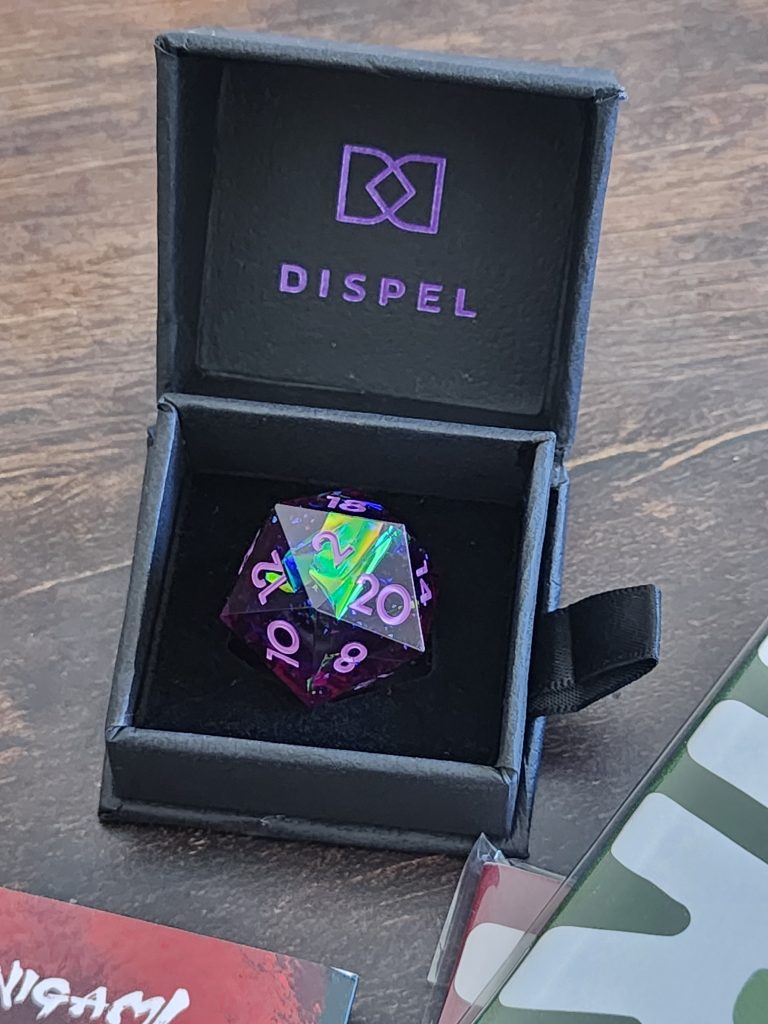
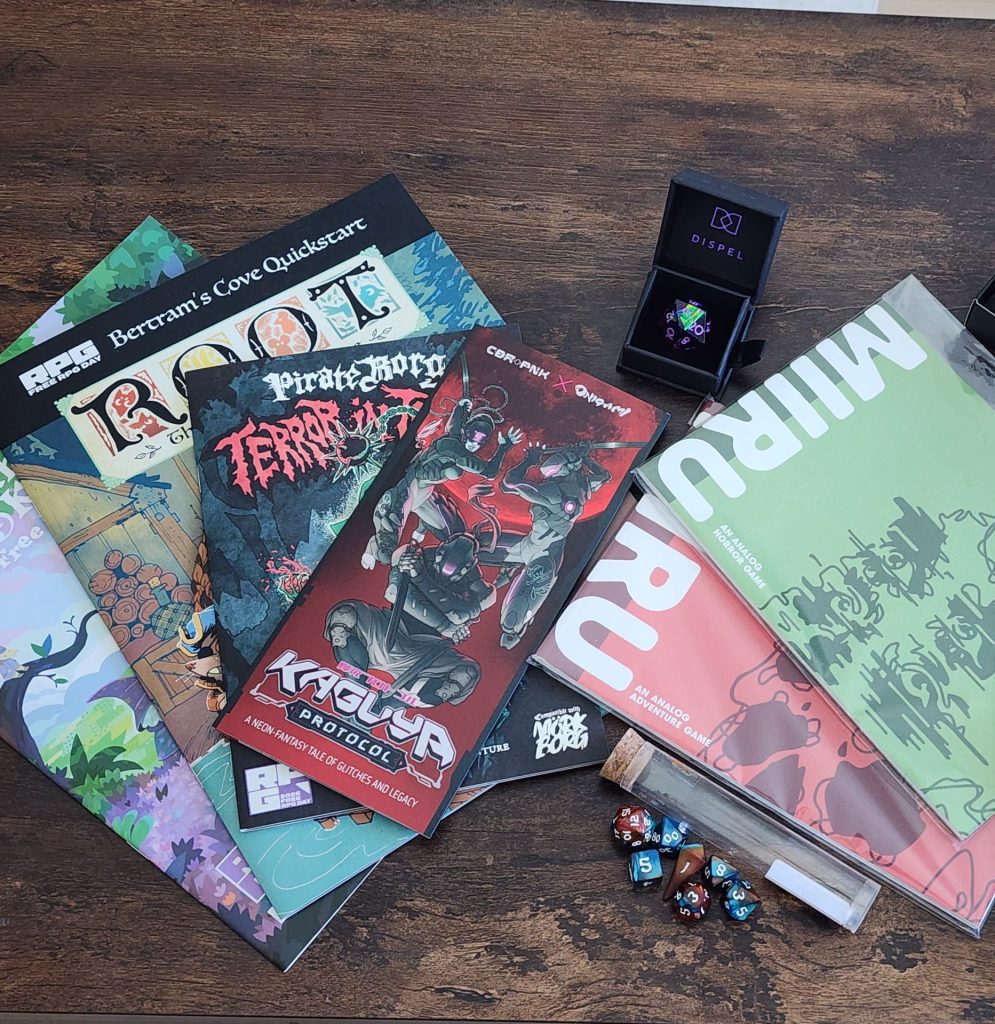
The store had their FRPGD goods well organized, and the process was simple. There were some goodies available for anyone who came in, but if you made a purchase in the shop, you could also take with you 3 of the new FRPGD booklets and 1 of the more “premium” items. This includes items such as a Dispel d20, some FRPGD pencils that doubled as a d6 roller, a sampler pack for the Story Engine Lore Masters Deck (a card system to help you generate all sorts of ideas) and some unpainted miniatures. They also threw in some options from their shop, including some full dice sets amongst other items, which was a nice touch considering the highly sought after items go pretty quickly.
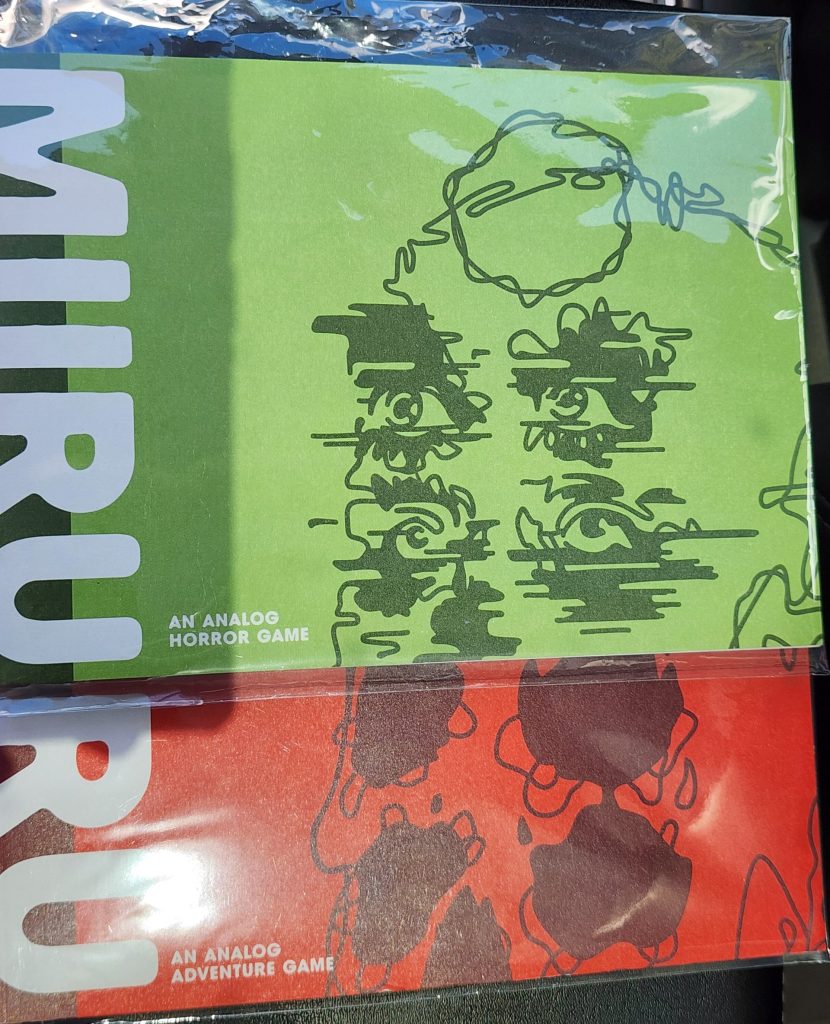
I picked up copies of Miru I and Miru II, which I haven’t seen physical copies of and the last time I had looked for them they were sold out everywhere (quite some time ago now). Miru is a solo-focused hexcrawl adventure, in a solarpunk world, where your protagonists goal is to hunt down and kill the God responsible for their brothers death. There’s actually 3 chapters to Miru now, and I’ll have to see about getting the 3rd once I get a chance to run through 1 and 2. Check out the digital versions of all three on Hinokodo’s Itch.IO page.
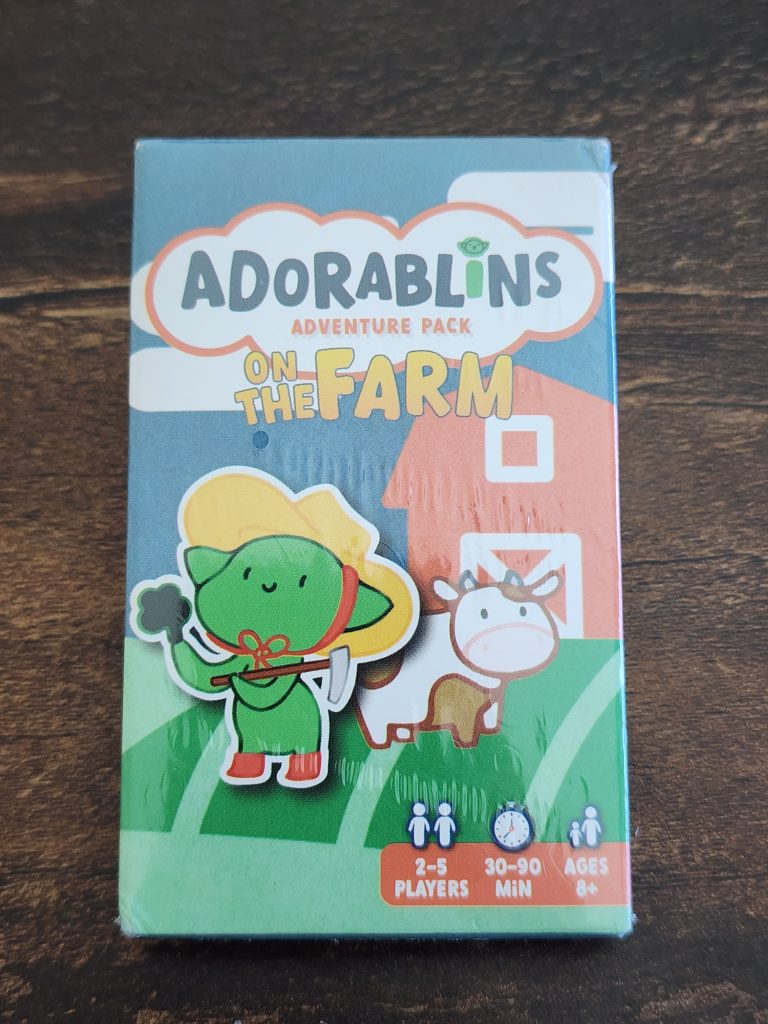
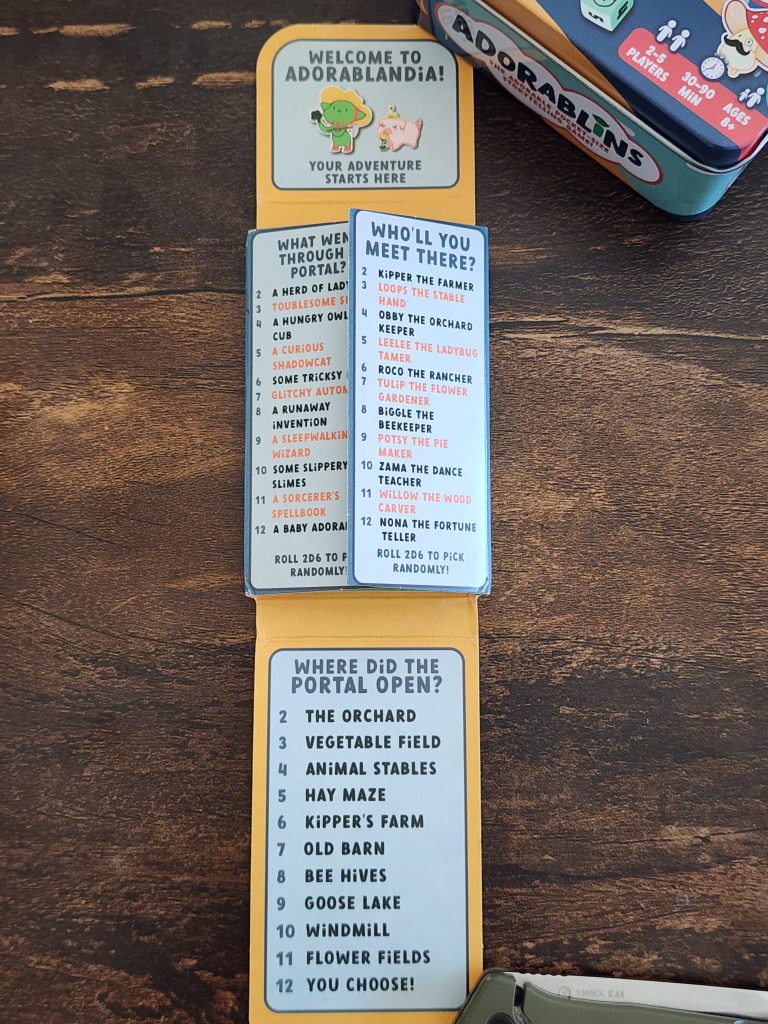
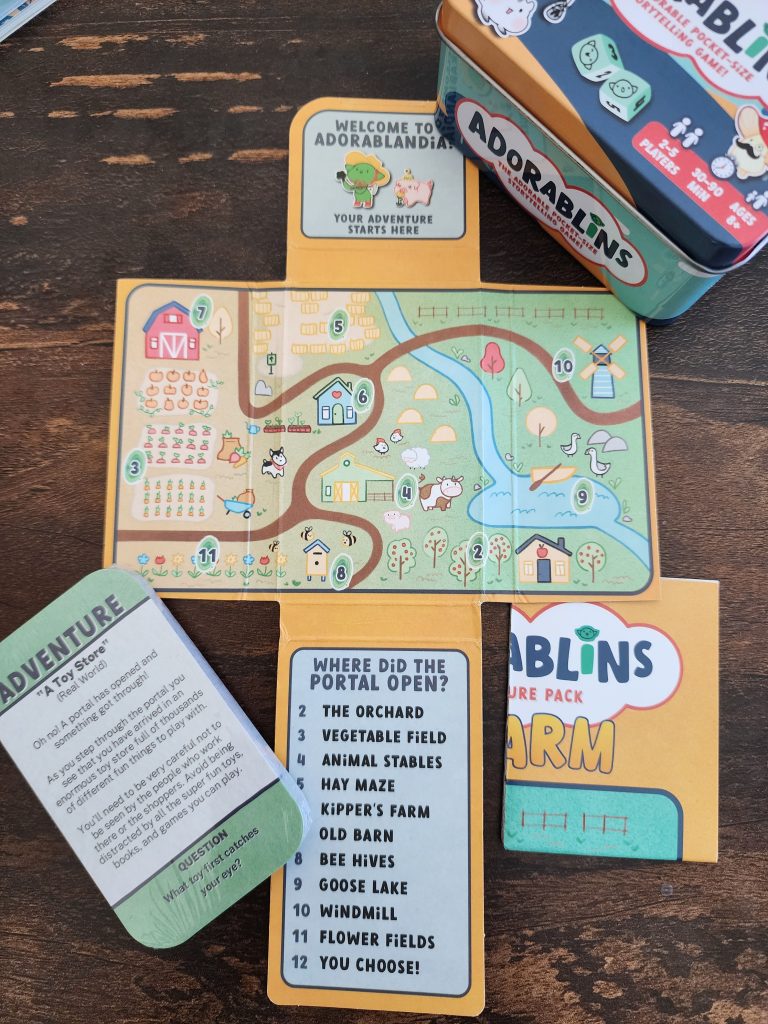
I picked up a few small additions, including this awesome expansion to Adorablins, which I wrote about previously. I didn’t even know there were expansions to this little mint tin game, but I really enjoy the packaging to it. It’s a great use of the interior flaps of the simple cardboard container to house random tables, and the very inside flaps fold out to a miniature map and locations! Little did I know, this expansion was already part of my tin can version of the game. But it’s OK, I was happy to get this as a reminder to go back and play this game again with my kids (who, like me, are easily distracted when there’s “new shiny things” all the time).
I was early in the line to get inside and when I got to the register to make my purchase, I took a moment to look over my selection options for the “premium” item choice. After giving the options a look-over, I decided on what looked like one of two remaining Dispel d20’s. Right as I was asking to for it, another gentleman at the register said the same thing (it was a classic jinx moment). Turns out, it was actually the last one, and a tricky box placement that made it look like two. So how did we resolve this conflict? Why, a friendly game of ro-sham-bo of course! We stood in front of one another, eyes locked, the rest of the store watching and counted down, “Ro-Sham-Bo“… as my paper covered his rock, I thanked him for a friendly game and got to take home the last Dispel die. The whole interaction was very friendly and good spirited, which was pleasant to see considering some people can get very touchy about limited items.
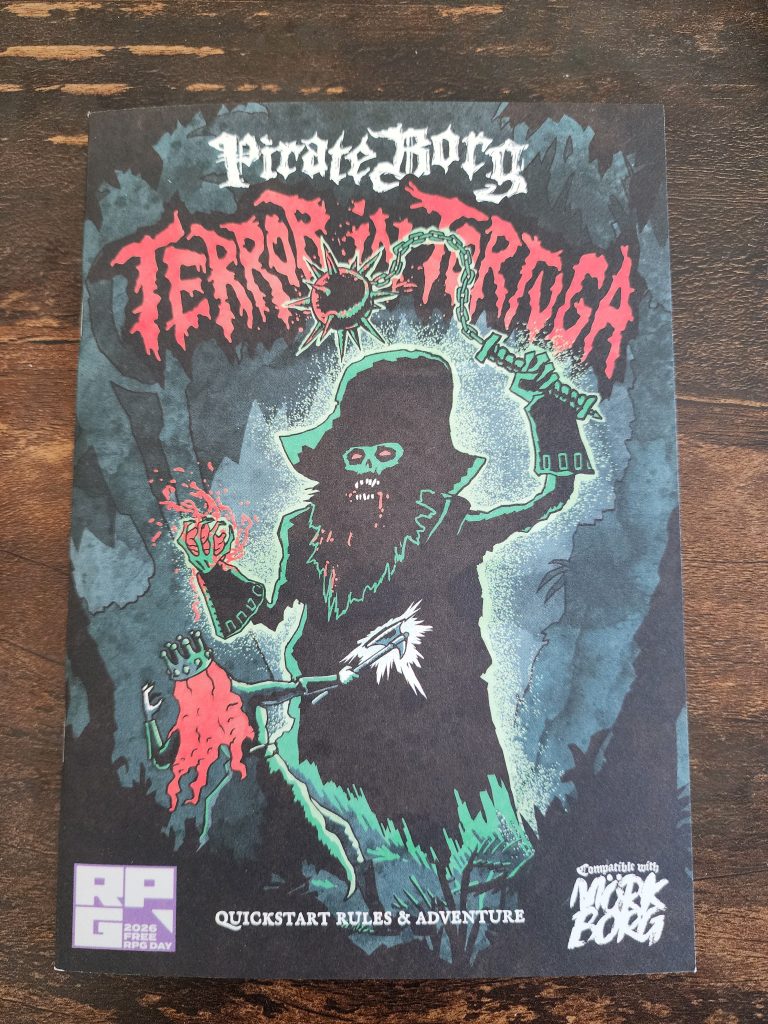
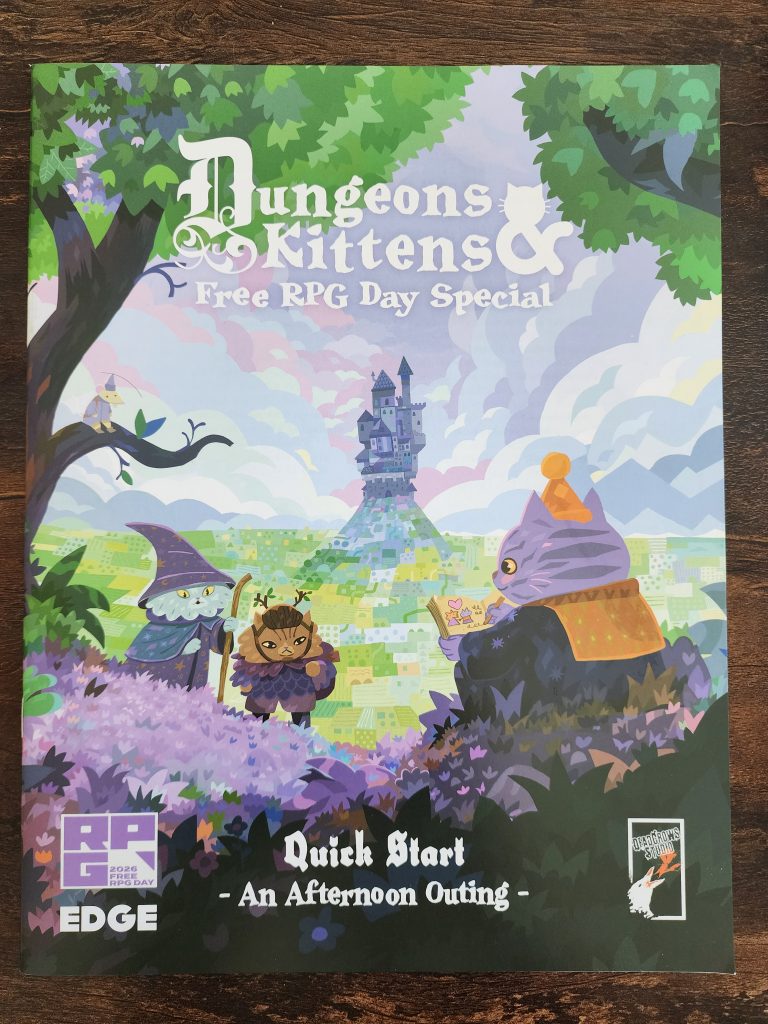
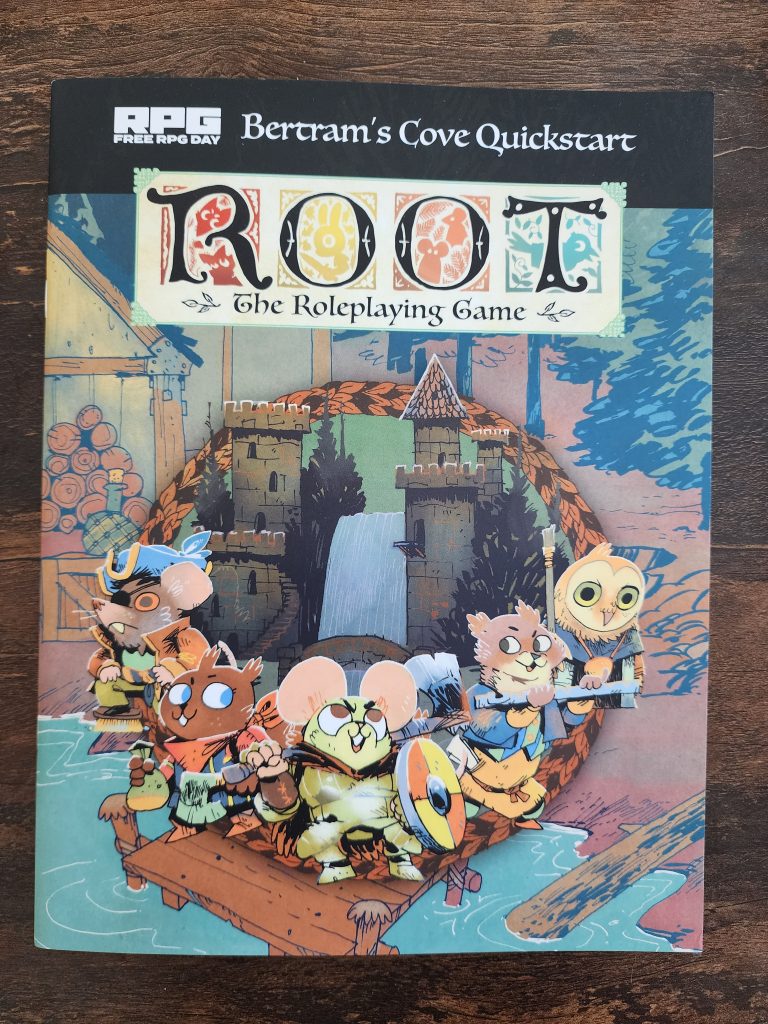
After that exhilaration, I flipped through several of the FRPGD booklets and chose to take the Pirate Borg Terror in Tortuga quickstart + adventure, the last Root quickstart that I didn’t have from prior years, and the Dungeons & Kittens quickstart + adventure that I thought would be another great game to try with my kids.
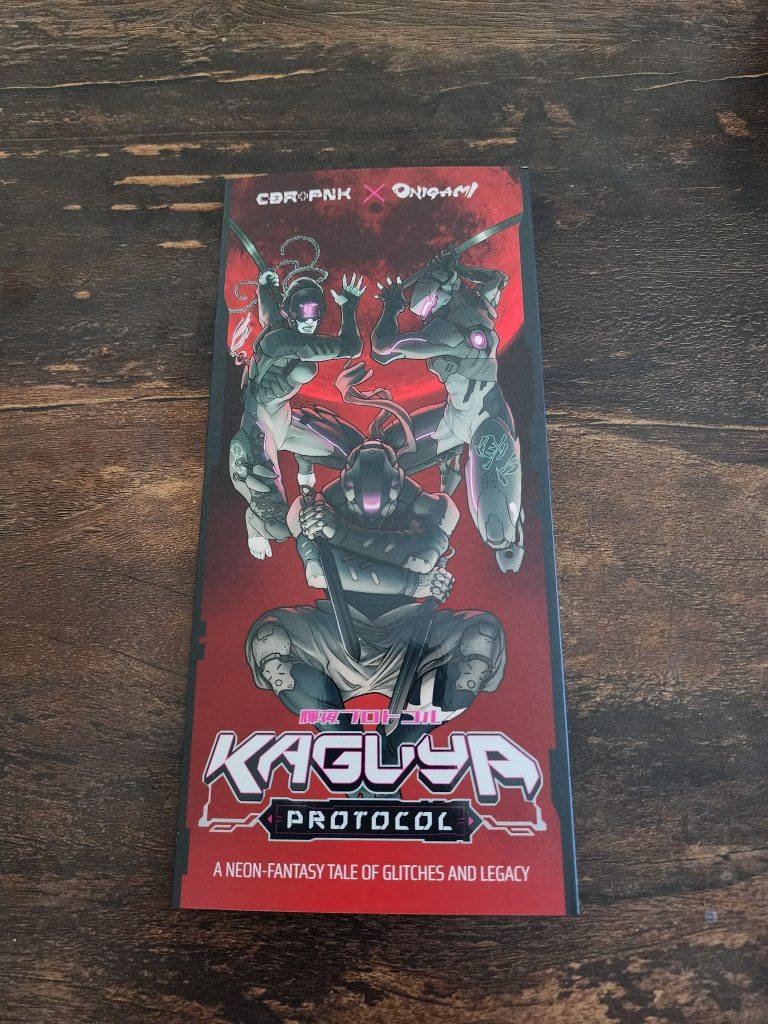
Of course, this post is a few days past FRPGD. Since then, I took a jaunt down to another game shop near my office to check out if they had any leftover goodies they were still looking to get rid of. They did, and I picked up a copy of the CBR+PNK pamphlet Kaguya, as well as a copy of the new Level 1 Anthology, a selection of Indie RPG’s with a central theme (this years being Stand Up!).
Overall, I had a great time getting out to a game shop, having a pleasant discussion with one of the staff members about the event, a few RPG systems, and some of the dice selection they had, and getting to play rock paper scissors without one of my kids forcing me to lose.
Have you been out to any local game shops lately? Perhaps attending a Free RPG Day event? If not, find something close by and maybe you’ll find a system or inspiration for your next Pen & Paper Quest!
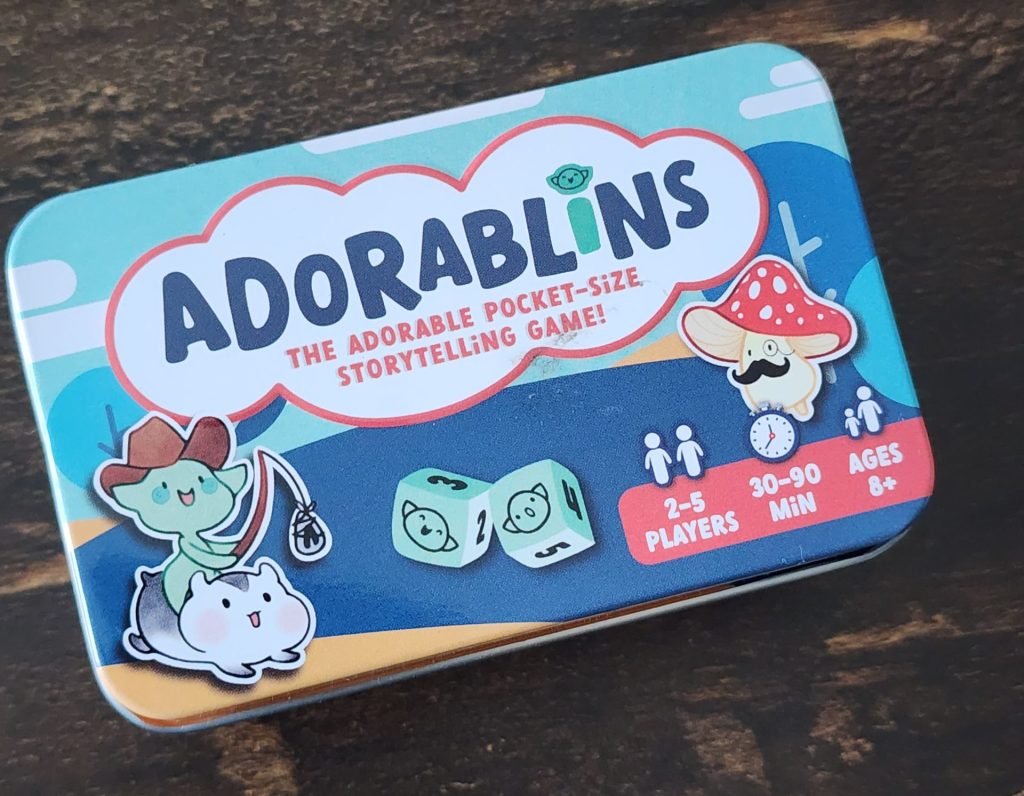
A few weeks back I went to a local discount book store and found a small “mint tin” style game. These are generally small, rules lite games that fit into any variety of small tins, commonly associated to mint tins (in this case think Altoids, but twice as tall).
Adorablins is the game that I had found. I went into it knowing nothing about the game, but the whimsical art style is what caught my eye. After reading the back of the tin, and at only a $7 price tag, I decided to pick it up. It seemed like just the kind of game I could play with my kids – rules light, relatively quick, and built around telling a story, not crunching numbers.
In Adorablins, play as a super cute goblin-like creature going on endless adventures! This easy-to-learn storytelling game has everything you need to play right in your pocket!
My first thought was that this would be exactly the sort of simple, guided system that I could get my kids to play. Last week, I had the chance to do just that! After dinner I pulled out Adorablins, spent around 4 minutes looking through the rule booklet and Narrator cards, and dove straight in.
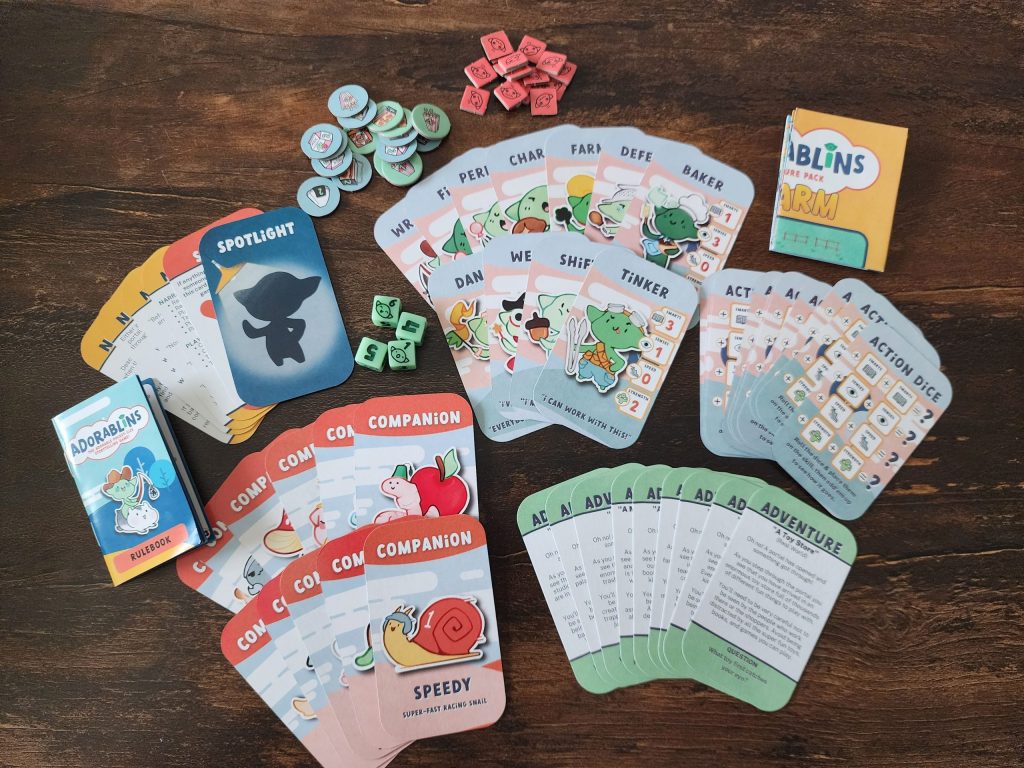
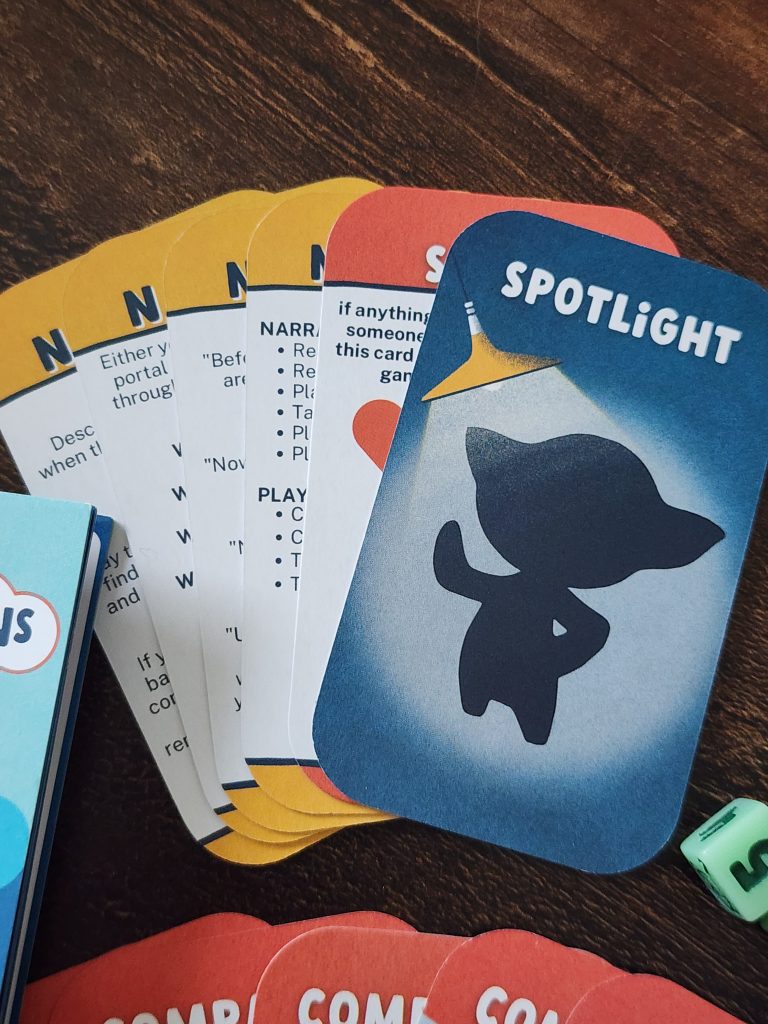
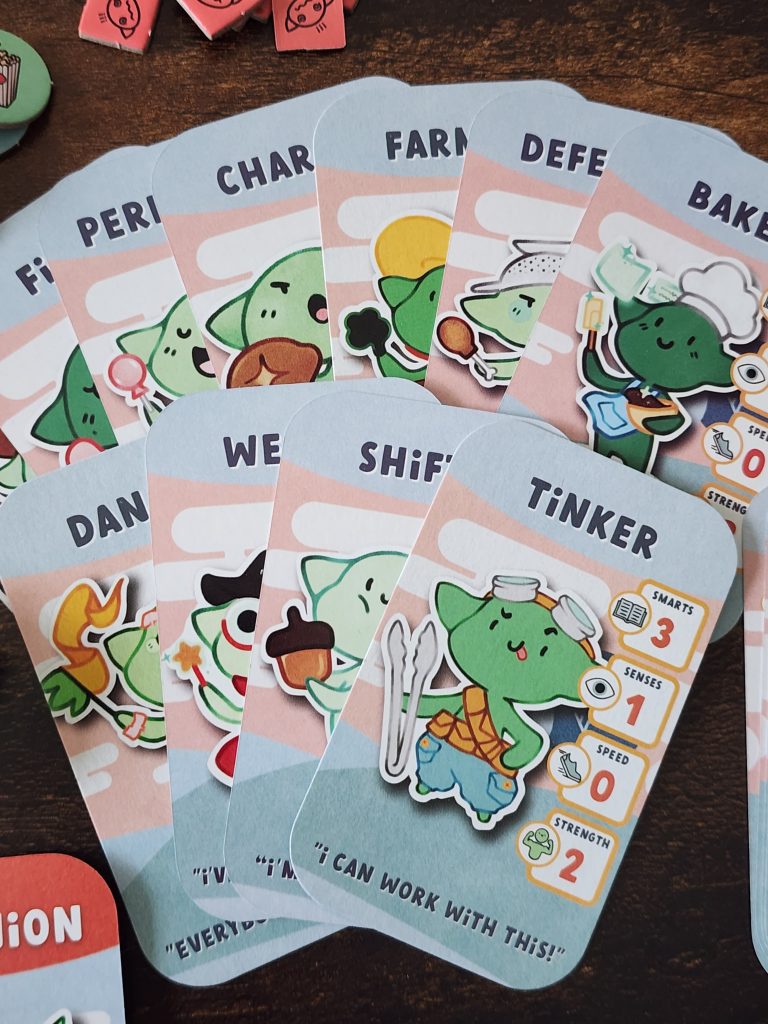
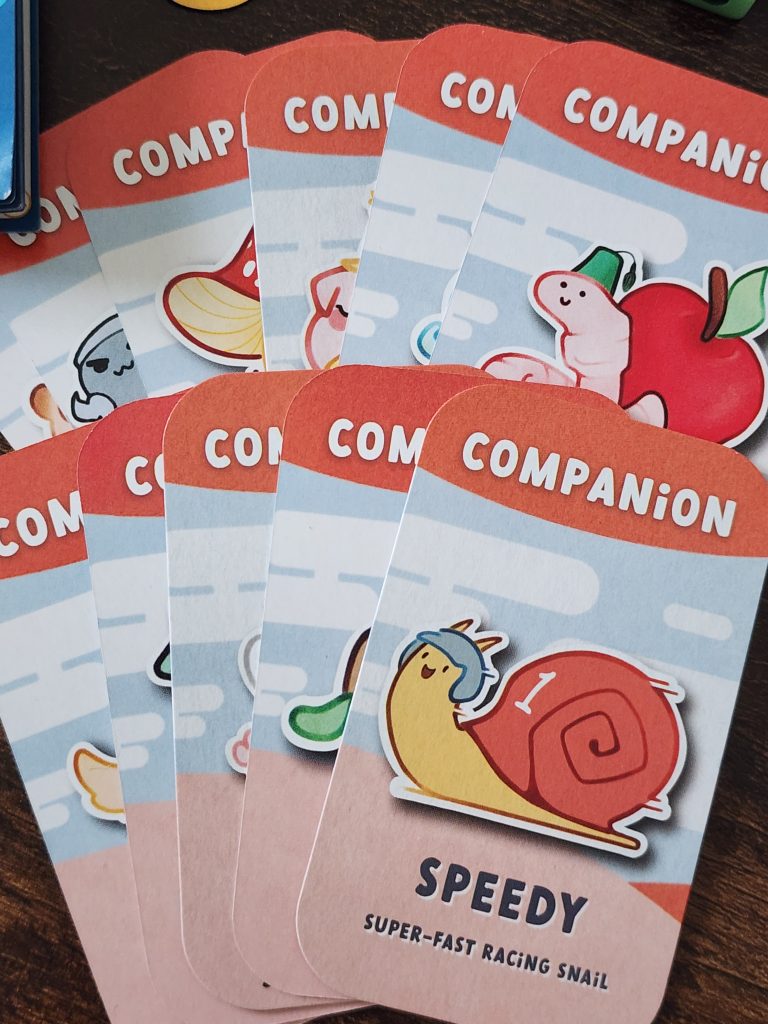
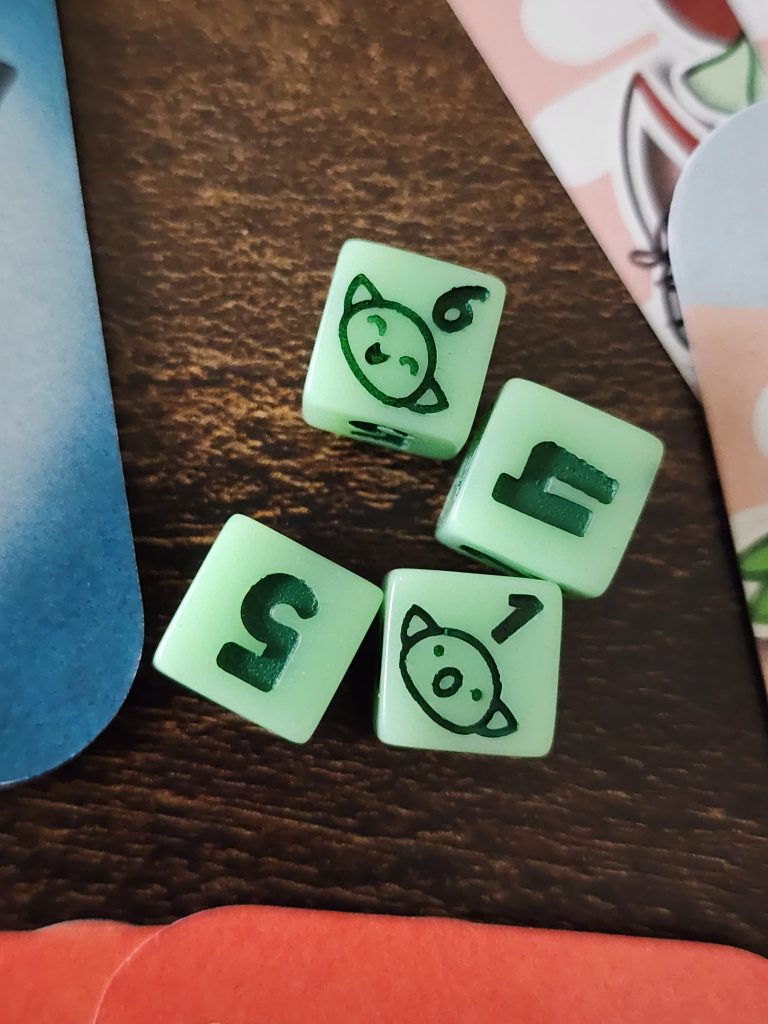
The tin includes 48 cards across 7 types (Characters, Companions, Adventures, Action Cards, Narrator Cards, a Spotlight and Safety Card), a small rule booklet, a folded paper map, two types of chits – snacks and conditions – and four adorable little ~10mm six-sided dice which have tiny goblin heads on the 1 and 6 faces.
As with most games, you choose one person to be the Narrator, often known as the DM, GM, Judge, Admin, Game Controller – the list goes on. That player will facilitate the gameplay and ensure the story moves along. They read the small rule booklet (~20 pages, 1.5″ x 3″) and once ready, read the Narrator cards out loud.
Narrator cards have the overall rules and include getting players setup, laying the foundation of the story, and setting the initial scene through a series of questions that everyone can chime in on and answer. There is a Spotlight card, used to give each player a turn in the storytelling, ensuring there’s not a single player who “hogs the limelight.” Then there’s a Safety Card, which has a large red-X on it, often referred to as an X-card. This is an RPG game tool created John Stavropoulos, meant to give players a way to “tap out” of specific topics or events that may come up in a game – no questions asked.
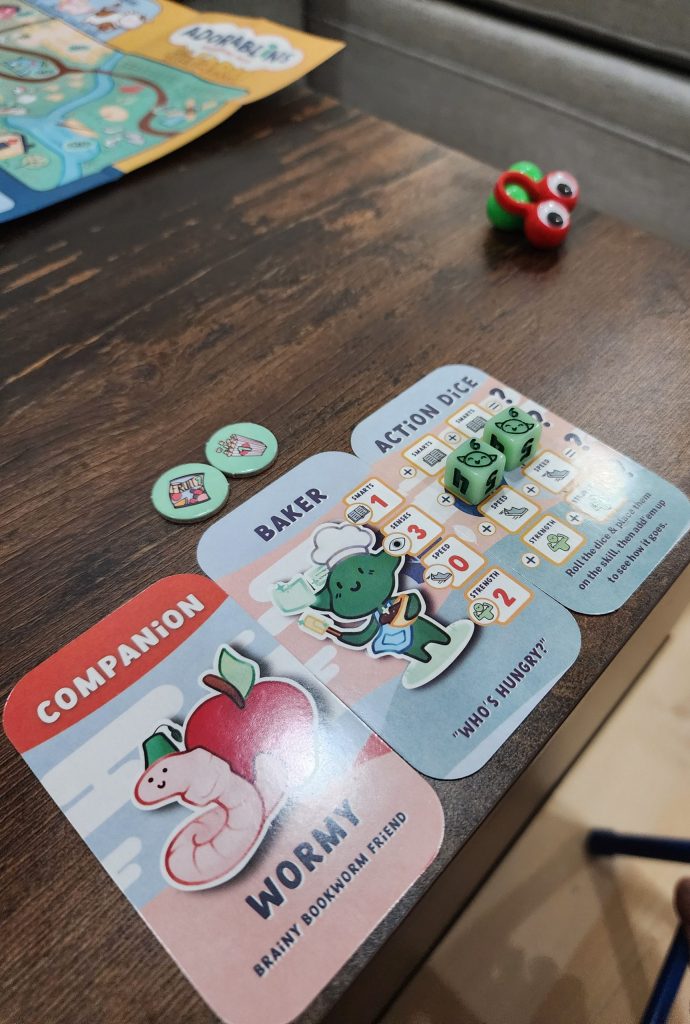
Character cards depict adorable goblins, each with a specific job and 4 stats – Smarts, Senses, Speed and Strength. On the reverse side of each card is an Ability and Item. For example, the Baker has “Food Magic” which allows them to conjure tasty treats of any flavour, and a “Recipe Book” which has recipes “for any situation.”
Companion cards are simply an image of a variety of companion entities – from Speedy the Super-Fast Racing Snail to Shroomy the Clever Fungus Friend. Companions are used to turn a struggle (failed roll) into a success. Afterwards, they have to be turned over to rest, but it’s OK, they just need a yummy snack to wake them up again!
Goblin math rocks, with actual goblins.
These dice aren’t quite 10mm in size, but they’re super cute. The 1’s all have a goblin face that has a look of shock on it, as if they just struggled with an important task, while the 6’s all have a smiling, happy goblin who clearly did well.
I wasn’t sure if my kids would want to play, or what kind of story they would try to come up with, but luckily they were excited to play a game with me even if they didn’t know what it was about. In fact, we ended up playing for nearly an hour and a half! Well past their bedtime when we wrapped up (which I was reminded of with how cranky my youngest became).
My oldest has a fascination with warriors and fighting bad guys, he chose The Defender, whom he named RJ. I read my youngest several of the character options and he chose The Baker, which he aptly named “The Cooker”.
To summarize the overall story we ended up narrating together, we started with The Cooker baking chips for RJ The Defender, because he was just out training and worked up quite an appetite. All of a sudden an Inventor burst into the Inn, shouting that a portal had opened near the beehives and his prized painting robot had just wandered into it. Someone had to help get it back!
The Cooker and RJ The Defender were immediately onboard, went to the beehives and walked into the portal (which they described as a “wiggly feeling”). The portal sent them to an alien world with large rock formations all around. My youngest rolled a Senses check and right out the gate had double-6’s! Things were looking up as they found the tracks of the robot and started following them.
After a short exploration through the rocks, they ran into an alien frog! RJ protected The Cooker while he brought out an over-sized spatula and whacked the frog on the head, leaving it dazed, confused, and no longer interested in the two goblins.
They continued on, until they came across an alien village inhabited by rock people (shoutout to Rocky from Hail Mary, which inspired these rock aliens). One more Senses roll later and The Cooker was laying on the charm, chatting with the village leader until they had a lead on the robot. It was heading towards a plateau overlooking “The Valley of Fire” – a valley full of active volcanoes!
They headed towards the plateau and saw the painter robot! It was sitting there, frustrated, as it tried to paint the volcanoes, but kept having to start over as lava flows would move and change the scene. Suddenly, a large, 4-winged, bird-like alien flew out of the valley and started to dive for the painting robot!
RJ rolled a Speed check to run forward and hold up his shield to protect the robot, barely able to push back the alien bird. While RJ continued to defend the robot, The Cooker brought out Wormy, his baking companion, to succeed in a skill check and work on some Food Magic. He conjured up a big, yummy, tasty… buttery bucket of popcorn. This attracted the bird, and gave them a chance to escape, robot in tow.
At this point I realized it was pretty late, so we sped up the tail end of our adventure by having another Speed check to make sure the goblins could get back to the portal and safely deliver the painter robot back to its inventor. My kids had fun making up a silly story, and being brave little goblins. My youngest even spent the time before bed telling my wife bits and pieces of the story.
Overall, this was a great game. It has just enough rules to get you going, includes rolling some dice, and keeps everyone involved by having them contribute to the story. Most importantly, I got to spend some time with my kids, and we all used our imaginations to share in a fun experience.
You could probably take pieces from Adorablins and pair it with bits from other goblin-inspired games, such as Goblin Mail or Goblin Quest, and create your own light-hearted solo RPG system.
Goes to show that you never know what kind of gems you might uncover for your next Pen & Paper Quest!